Following Art Trends Without Losing Your Style (Lessons from 17 Years in Fashion)
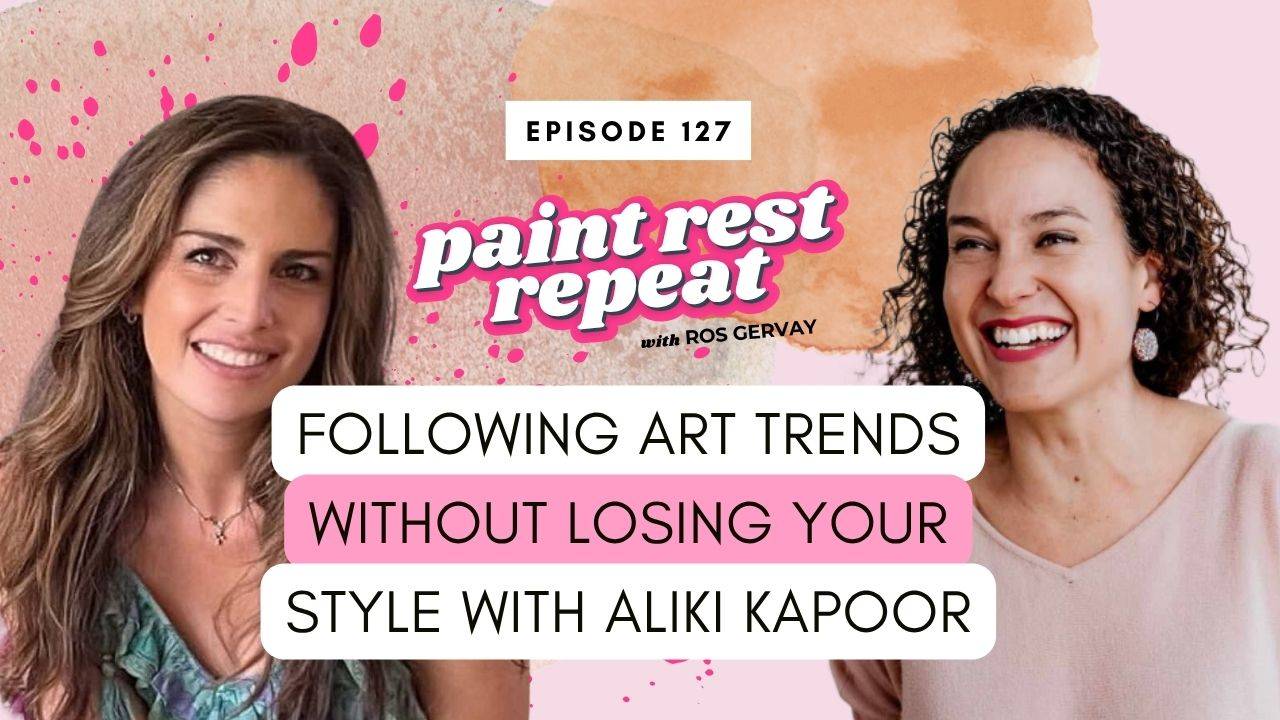
Episode 127 | Paint Rest Repeat Podcast for Artists
In a Nutshell Should you paint what's trending? Melbourne artist Aliki Kapoor spent around 17 years as a fashion designer, so she knows trends inside out. She also knows that art isn't fast fashion. In this post, we explore how to notice trends without letting them lead, the two kinds of people who buy art, and how Aliki weaves current colours into her work while keeping her signature style. You'll also hear how her fashion career shaped her art, why she nearly dismissed her first stockist as a scam, and five practical ways to stay current without losing what makes your work yours.
Here for the links mentioned in the episode?
Aliki's website: https://alikiart.com
Aliki on Instagram: https://www.instagram.com/aliki.k
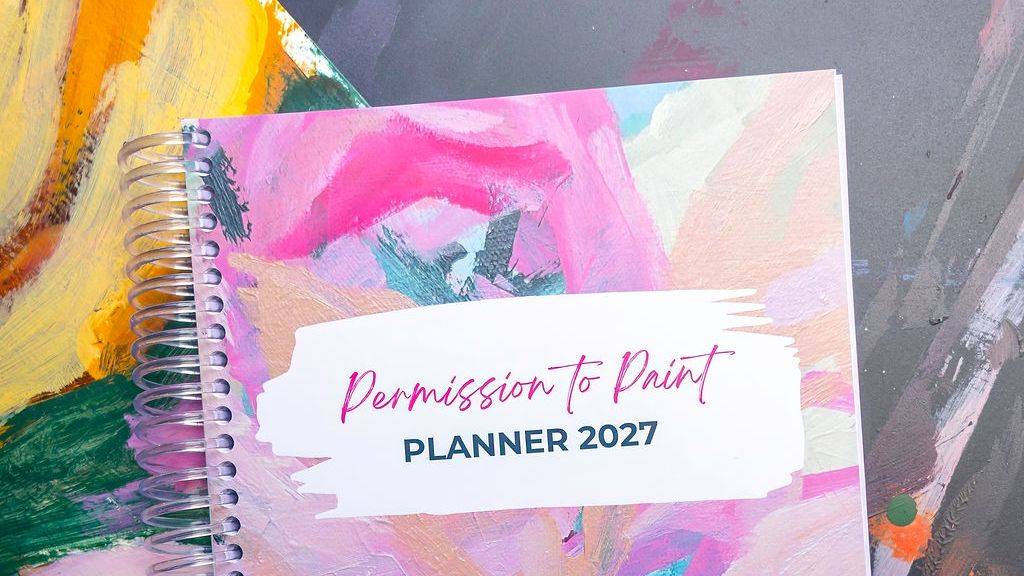
The 2027 Permission to Paint Planner: https://www.permissiontopaint.co/planner
Episode 127: Listen using the player below, or click your favourite listening platform to subscribe and listen there.



Every few seasons, something new takes over
Warm browns. Moody maroons. That one shade of sage that suddenly appears on every cushion, rug and feature wall.
Trends move through interiors the same way they move through fashion. And if you sell your art, it's hard not to notice.
So what do you do with that? Paint what's popular and risk losing yourself? Or ignore trends altogether and hope the right buyer finds you anyway?
My guest this week, Melbourne artist Aliki Kapoor, has one of the most thoughtful perspectives on this I've heard. And she's earned it.
From cutting swatches to designing ranges
Aliki spent around 17 years in fashion as a designer and product developer. She studied at RMIT, then started right at the bottom of a major fashion label back in the 90s.
"There was no glamour behind it whatsoever," she told me. Think cutting fabric swatches, fetching toasted sandwiches, and growing a very thick skin.
She worked her way up from there. Over the years she learned to spot what was coming next, to read buyer behaviour, and to put together the colour palettes for clothing ranges you'd eventually see in stores.
It was demanding work. Long hours, lots of travel, and an expectation to give more than everything. By the time she stepped away to have her two daughters, she was burnt out.
Painting at night, just for herself
Aliki didn't plan to become an artist. In her words, it happened "purely organically, by default."
At home with two little ones, she started drawing and painting at night for her own mental happiness. Friends from fashion saw her work and told her to post it. They'd buy it, they said.
Coming from such a critical industry, her first thought was that she wasn't good enough. She was a designer, not an artist. But she found the courage to post anyway, and people started asking where they could buy.
So she began. She had no idea where to buy paint or how to approach a gallery. She figured it out as she went.
What she did have was a toolkit from fashion. She made mood boards. She built colour palettes the way she used to build clothing ranges. Some of her first florals were inspired by embroidery.
If you've ever thought of your previous career as a detour, hold that thought. We'll come back to it.
"Is this real?"
Here's a part of Aliki's story that so many artists will feel in their bones.
An interiors store she'd admired for ages messaged to say they loved her work and wanted to stock it. Aliki's first thought was that it must be a scam.
She went to meet them in person, just to be sure. And she asked them, more or less, "But why do you like it?"
They really did love it. Years later, she's still stocked at Crate Expectations in Malvern.
Self-doubt can be sneaky like that. If Aliki had listened to it, she might have deleted that message and never replied.
That's why I suggested something to her that I'd love you to try too: start a praise bank. Every time someone says something kind about your art, save it. A screenshot folder, a note on your phone, a stack of sticky notes. It's not egotistical. It's evidence for the wobbly days.
Should you follow art trends?
This is where Aliki's fashion background really shines.
Notice trends, but don't follow them
Aliki can still sense what's coming next (although she admits her teenage daughters are now the real trend forecasters at home). These days, she finds inspiration in interiors, architecture and the little details of buildings.
But noticing a trend is not the same as chasing one.
"You still have to find your own signature," she said. If another artist is suddenly selling lots of cowboy paintings, that's not a reason for you to start painting cowboys. Follow your own style. Keep experimenting. Then, if it feels right, add just a little of what's current.
Art isn't fast fashion
I asked Aliki whether artists should steer clear of a "fast fashion" approach to their work. She didn't hesitate.
"Art needs to be long-lasting," she said. "It's a big investment."
A trendy top might be loved for a season before it's swapped for the next one. A painting is meant to stay. If your whole body of work is built around this year's colour, it can date as quickly as the cushions it was matched to.
The two kinds of people who buy art
This was one of my favourite insights from our chat. In Aliki's experience, there are two kinds of buyers:
- The art collector. They buy purely because they love the work. If they love flamingos, they'll buy the flamingo painting and make it work in their home.
- The stylist. This might be a homeowner, an interior designer or a company. They're buying to finish a space, so how the piece looks in the room matters a lot.
Neither is better than the other. But knowing who you're speaking to helps you make clearer decisions about what you paint, how you describe it and where you share it.
Using trend colours your way
Aliki does sometimes paint with trend colours. Right now she's loving maroons and warm browns. The large textured floral hanging behind her in our YouTube video is a gorgeous example. She brought in oils and a palette knife, built up layer after layer, and worked in a warm, current palette.
She's honest that pieces like this are more commercial. Some clients even ask her to match a painting to their cushions, and she's happy to do it.
But it still has to look like hers. The loose florals. The layers. The sketchy marks. The trend is the seasoning, not the main ingredient.
Your style comes with you
The first artwork that felt truly hers came in 2017. Aliki grabbed a huge canvas, close to two metres, along with a water bottle and her paints. She let washes of moody indigo and aqua drip down the surface, added pops of magenta, then drew loose, sketchy flowers over the top with the back of her brush.
One piece was called Floating Flowers. Another was Rage Flower, which she laughs was "more angry and dark and moody, but it was still pretty."
Collectors still ask her for more work like that series.
Since then, Aliki has explored more structured still lifes, got a little tired of them, and is now finding her way back to her looser style in a new way. She's even toying with a series of female figures and silhouettes. Then the self-doubt kicks in. Will people think she's lost the plot?
Here's what I told her. Once you've been painting for a while, your style travels with you. Your colour sense. The way you make marks. Even if you change your subject matter, those things still come through.
So if you're itching to try something new, try a small test collection. See how it lands. (Aliki, I'm cheering you on.)
Building your art business your way
One of the things I loved most about Aliki's story is how clearly she's made her own choices.
She's never stretched herself across dozens of galleries. She's kept a close-knit few, pulled back from some, and now prefers working directly with her collectors. She admits that's a little harder, but it's also nicer.
When a stockist approaches her, she meets them, listens and asks questions. She's said no when something didn't feel right, because she doesn't want to be locked in or told what to paint.
And when someone asks for ten identical paintings? She's honest. She can't do it. Not out of ego, but because her process is so intuitive. "It's not my brain, it's my hand that cannot do it," she said.
You can build your art business your own way. If you don't want to be in lots of galleries, you don't need to be. If you don't want to churn out identical pieces, you don't need to. You get to make the choices.
Riding the quiet seasons
Like fashion, the art world has its ups and downs. Aliki has had wonderful years, and quieter ones where she's wondered whether she should go back to her old career.
Her advice is simple: "You have to ride the wave." Keep doing what's in your control, and trust that the good times come around again.
Aliki is also very camera shy. Rather than forcing herself to dance around on camera, she lets her art speak for itself. If you relate, my conversation about marketing your art as an introvert might be a lovely next listen.
Why self-set deadlines are so hard
Aliki loves a deadline. When a gallery needs a certain number of pieces by a certain date, the buzz gets her moving.
Now that she's selling more of her work directly, though, she has to set her own deadlines. And they're much harder to keep, because there's no one looking at you asking, "Have you done it yet?"
Her workaround is to share what she's working on publicly on Instagram. Once it's out there, she has to follow through.
If that sounds familiar, you're in good company. Having no deadlines was one of the 5 art business mistakes I'd never make again, and I shared simple ways to give your goals a date in How to Turn Your Art Dream into Reality.
Your past career isn't a detour
To close, I asked Aliki what she'd say to an artist who feels like their previous career was a detour.
She believes every skill you've gained will help you, whether you worked in finance, advertising, teaching or anything else. "All those little skills count," she said.
Business and numbers aren't her strengths, she says. But colour is. For years, she put together the palettes for clothing ranges you'd see in stores. Now she does it on canvas.
(If this resonates, you might also love my conversation with Bridie O'Brien about starting later as an artist. Listen here.)
5 ways to use trends without losing your style
- Know your signature first. Write down what's always in your work: your marks, your go-to colours, your favourite subjects. That's your non-negotiable.
- Collect trends, don't copy them. Notice colours and moods in interiors, architecture and fashion. Save them to a mood board, then ask which ones genuinely excite you.
- Add a little, not a lot. Try a trend colour as an accent in your usual style rather than reinventing your whole body of work.
- Know who you're painting for. Is this piece for a collector who loves your work, or for someone styling a space? Both are valid. Let the answer shape how you describe and share it.
- Test before you commit. If you're tempted by a new direction, make a small test collection, share it, and see how it feels before you change course.
What's current, and what's yours
Trends will keep coming and going. That's their whole job.
Your style is different. It's built from everything you've lived, learned and loved, including the careers and chapters you might have written off.
So notice what's happening around you. Borrow a colour if it sings to you. Then paint it the way only you can.
Give your next idea a date
If Aliki's story has sparked something for you, whether that's a test collection, a new series or a body of work you keep meaning to finish, the 2027 Permission to Paint Planner can help you give it a date and a plan.
Like Aliki, so many of us find self-set deadlines the hardest to keep. The planner gives your ideas somewhere to land, so they don't stay stuck on your someday list.
Inside, you'll find:
-
Task lists to get everything out of your head
-
Goal breakdowns so your goals move beyond dreams
-
Weekly focus areas to keep your priorities clear
-
Daily priorities, so you always know your top three
It's designed specifically for artists, so it's simple and not over-engineered. Whether you paint purely for joy or you're building an art business, it's about making space for the art that matters most to you.
The digital planner is $49 AUD. There is also a limited number of signed, spiral-bound A5 printed copies, for those who love pen on paper ($80 AUD, including shipping within Australia).
If you’re ready for more personalised support in building your art business, there are plenty of ways we can work together — from self-paced courses and practical resources to memberships and masterminds. Reach out here.
Ros x
Ros Gervay is an Australian artist and creative business coach who helps artists build sustainable, income-generating art businesses without burnout or compromise. She is the founder of Art for the Heart (AFH) — an online membership community for artists at all stages — and the creator of the Thrive Mastermind, a professionalisation container for artists ready to grow beyond the learning stage. Ros hosts the Paint Rest Repeat podcast, where she shares honest conversations about the art life, creative business, and what it really takes to get paid to do what you love. Based in Australia and working with artists worldwide. Learn more at permissiontopaint.co
Frequently Asked Questions
Should artists follow art trends? Notice them, but don't let them lead. Former fashion designer Aliki Kapoor recommends developing your own signature style first, then adding a little of what's current if it genuinely excites you. Chasing whatever is selling for other artists tends to make your work harder to recognise.
Will using trend colours make my art look dated? It can, if your whole body of work is built around one season's palette. Art is a long-term investment for buyers, so trend colours tend to work best as an accent within your usual style, not a complete reinvention.
Who buys art? In Aliki's experience, there are two main kinds of buyers. Collectors buy because they love the work itself. Others, like homeowners, interior designers and companies, buy to style a space, so how the piece suits the room matters a lot. Knowing who you're speaking to helps you describe and share your work more clearly.
How do I keep my style if I change subject matter? Your style lives in more than your subject. Your colour sense and the way you make marks travel with you. If you're tempted by a new direction, try a small test collection to see how it feels and how your audience responds.
Can my previous career help me as an artist? Absolutely. Aliki used the skills from around 17 years in fashion, like mood boards, colour palettes and reading buyer behaviour, to shape her art practice. Whatever you did before, those skills count.
How do I stick to deadlines I set for myself? Self-set deadlines are harder because no one is checking in. Try sharing your plans publicly, telling an art buddy, or using a planner that gives your goals a date. The 2027 Permission to Paint Planner is designed to help artists do exactly that.