How Art Helps Us Find Ourselves (and Why Being You Sells)
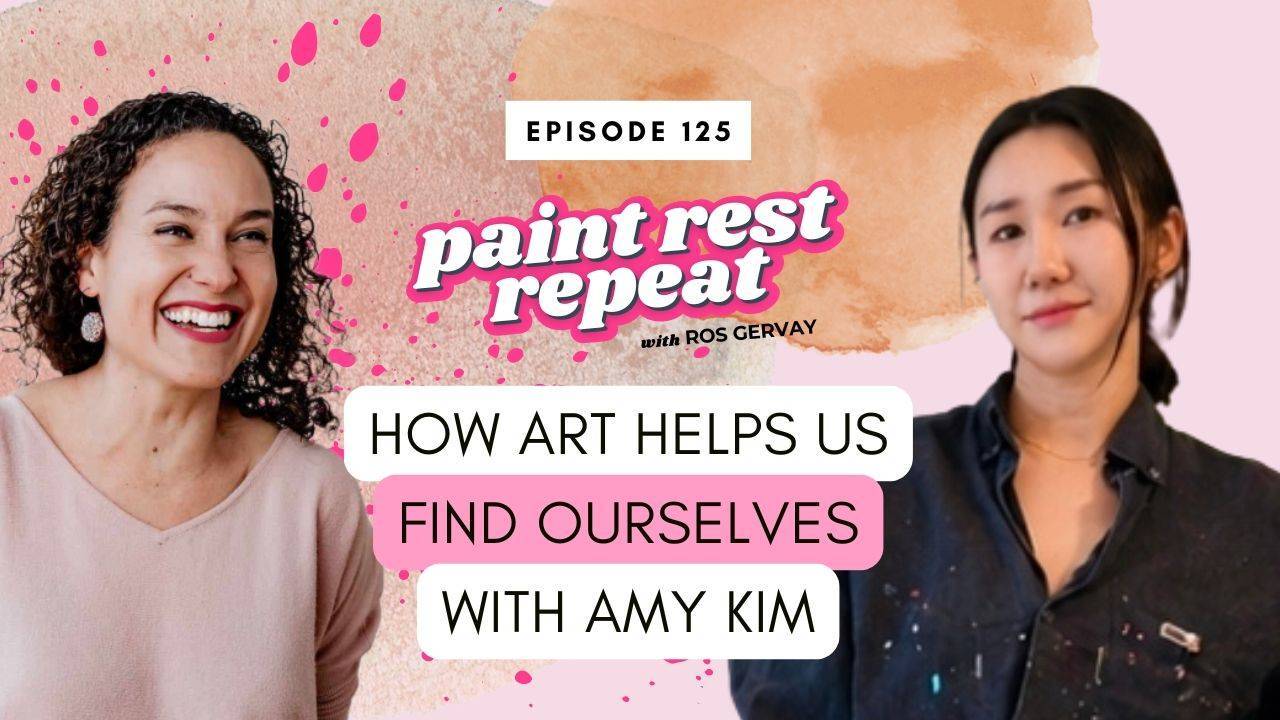
Episode 125 | Paint Rest Repeat Podcast for Artists
In a Nutshell Artist Amy Kim studied art more than twenty years ago, then stopped. She was convinced she wasn't creative enough or brave enough to be an artist. Work, marriage, teaching and motherhood filled the years in between, until after the birth of her second daughter she couldn't answer a simple question: who am I? Painting became her way back. In this post we explore Amy's journey from hard-edged, carefully controlled work to a looser, more intuitive practice. We look at how her paintings started revealing things she didn't know she was carrying, and why being yourself in your art is also what helps the right people find you. You'll also find five practical ways to bring more of you into your work, plus details of Amy's upcoming exhibition, 'Being'.
Here for the links mentioned in the episode?
Amy's website and the 'Being' exhibition call-out: https://www.byamykim.com
Amy on Instagram: https://www.instagram.com/amykim.art
The 2027 Permission to Paint Planner: https://www.permissiontopaint.co/planner
Episode 125: Listen using the player below, or click your favourite listening platform to subscribe and listen there.



When you don't recognise yourself anymore
Have you ever looked up from your life and realised you'd lost track of yourself somewhere along the way?
Not in a dramatic way. More in a quiet, creeping way. You got busy being useful. Being needed. Being whatever the day asked of you.
That's where Amy Kim found herself.
She'd studied art more than twenty years ago. But when she graduated, she walked away from her practice. She'd decided she wasn't creative enough to be an artist. Not brave enough, either.
So life carried on. She worked in design. She taught at a kindergarten for about ten years. She got married and had children.
Then, after her second daughter was born, something shifted.
"I couldn't even tell people who I am," Amy told me. "I asked myself, what am I doing? What do I want to do with my life? I couldn't answer that."
It was a big wake-up call. So she picked up a pencil and a paintbrush again.
"There are so many talented people out there"
Here's the part I think so many of us will recognise.
Even once Amy started drawing and painting again, the doubt came straight back with her. There were so many beautiful, talented, creative people out there. How could she possibly be good enough?
What helped was a reframe. Painting wasn't about proving herself. It was about learning about herself.
That changed everything. Slowly, a little bit of connection came back. She remembered why she'd loved art in the first place, and why she'd wanted to study it at all.
Then COVID hit. For Amy, the lockdowns gave her something she hadn't had in years: time for herself. That's what really got things moving.
If you're waiting until you feel "good enough" to take your art seriously, this is your gentle nudge. You don't have to prove anything to start. You're allowed to begin simply because you want to know what's in there.
(If this part of Amy's story feels close to home, you might also love my conversation with Bridie O'Brien about starting later as an artist - listen here.)
Giving everything to everyone else
Amy loved teaching. Supporting young children's creativity and watching them learn through creative play was deeply rewarding.
But anyone who has taught will know the flip side. I was a primary teacher myself, so I nodded along to every word of this. You give absolutely everything to your classroom, your colleagues and your community. Then you come home with nothing left.
Nothing left for your own family. And definitely nothing left for yourself.
"I didn't know how to look after myself," Amy said, "because I was so used to giving it all to others."
On top of that were all the other roles she'd been stepping into since she moved to Australia from Korea on her own at about nineteen. Wife. Designer. Teacher. Mum. Each one asked her to fit a particular shape. Over time, the person underneath all those roles got harder and harder to find.
If you're juggling your art around work, family or caring for others, you'll know this feeling. It's why making time for your creative practice isn't selfish. It's often how you find your way back to yourself.
How your upbringing shows up in your art
One of my favourite parts of this conversation was when we got talking about Amy's style.
For years, her work was very hard-edged. Structured, clean, controlled. It looked carefully planned, even though it wasn't.
When I asked where that came from, Amy's answer made so much sense.
She went to an art high school in Korea, where art education was very structured. Students had to master still life, landscape and portraiture, and follow the guidelines exactly. There wasn't much room for personal expression.
Then she arrived at art school in Australia and was told, more or less, "Do whatever you like."
"I really struggled," she laughed. "I was like, just tell me what to paint!"
The hard edges gave her comfort. If she stayed inside the lines, she must be doing something right.
Over time, though, she noticed something.
"Being in that perfect line is not really alive."
(I have to confess, I once tried a hard-edge artwork in Year 9. I spent about five million hours correcting the edges. That was the moment I realised that style did not suit my perfectionist nature at all.)
These days Amy is deliberately loosening up. She starts with no sketches or outlines. The beginning of a painting is intuitive. Somewhere in the middle she becomes more aware of what's happening, and the work starts connecting to her memories and her view of life.
She's not trying to become someone else. She's expanding. Learning to accept where she came from, and to grow from there.
When your paintings reveal what you're carrying
Amy has spoken before about her paintings revealing things she didn't realise she was holding onto. I asked her for an example.
She told me about a series on childhood memories with her grandmother, created during the COVID years.
Amy's grandmother, her mum and her aunties share a really strong bond. Growing up in Korea, the women of the family had a weekly ritual of visiting the public bathhouse together. It was a simple, shared tradition, and it shaped her more than she knew.
Amy didn't plan the series to go where it did. But as she painted, the memories flooded in. She began to see how her shapes and colours connected to those women. She saw the strength they carried and how hard they had worked.
Becoming a mother herself helped her understand them in a whole new way.
"All of a sudden you have to be all grown up," she said. "To know better, to do better, to manage better. But no one taught us that."
That series helped Amy see her cultural heritage as something to embrace, not something to leave at the door. It's part of who she is. And it's now part of her art.
Why being you is good for your art business
I want to pause here and put my coaching hat on for a moment. This isn't only a lovely story. It's one of the most important things you can understand about selling your art.
People connect with people, not just paintings
When someone buys an original artwork, they're rarely buying a nice arrangement of colour and shape. They're buying a feeling. A story. A connection to the person who made it.
Amy's grandmother series is a perfect example. The story behind it is part of what makes it so powerful. Once you know it, you can't look at those paintings the same way again.
Your story is already in your work
You don't need to invent a brand story. You already have one.
Where you grew up. What you were taught. What you've lost, loved and let go of. It's all already in your art, whether you've noticed it or not. Your job is to get curious about it, and then to share it.
Trying to look like everyone else makes you easier to forget
When we're unsure of ourselves, it's so tempting to paint what we think we should be painting. Or what seems to be selling for someone else.
But the more your work looks like everyone else's, the harder it is for the right people to find and remember you. I talked about this more in 5 art business mistakes I'd never make again. Comparisonitis was number one on that list for a reason.
Honest sharing calls in the right people
I told Amy that her content pops up in my feed every now and then, and it always feels real. Honest, heartfelt, and very her.
That kind of sharing doesn't attract everyone. It attracts the right people. The ones who care about the same things you do. And those are the people most likely to become collectors, students, supporters and friends.
Connection beyond the screen: Amy's 'Being' exhibition
All of this led Amy to her newest project.
After years of art fairs, shows and exhibitions, she felt something was missing. There were so many talented artists, but it was hard for them to connect in a meaningful way. Social media helps, but it's not the same as being in a room together.
She also noticed that people at art fairs often wanted to know more about the artists and their work. They just didn't know how to ask. Art fairs can feel quite transactional. Amy wanted to create space for deeper conversations.
With encouragement from Kim, the director of Sol Gallery, she's now curating a group exhibition called 'Being'. It's about how we live in this world. The struggles we all go through, and how we still find joy and a reason to keep going.
Amy is planning artist talks, and possibly workshops too. She's keeping the shape of the show open for now so it can grow from the submissions she receives. And she's had far more than she expected.
"Reading the submissions just makes me cry," she said. "We all have similar stories and similar struggles. At the end of the day, we're all just human."
If you'd like to learn more or apply, the call-out page is on Amy's website. You'll also find her on Instagram at @amykim.art.
5 ways to bring more of yourself into your art (and your art business)
- Make one painting just to learn about yourself. Not to sell. Not to post. Just to notice what comes up.
- Look for your patterns. Grab a handful of your works and ask what keeps showing up. Colours, shapes, subjects, moods. What might they be saying about you?
- Try loosening one thing. If you usually plan every detail, start one piece intuitively. If you're always loose, try some structure. See what you learn at the edge of your comfort zone.
- Write down the story behind one piece. Where did it come from? What does it remind you of? That little paragraph could become a caption, a label, or the thing that helps a collector fall in love.
- Connect in real life. Go to an exhibition opening, a local meet-up or an artist talk. Start a conversation. Online connection is wonderful, but nothing replaces a real conversation.
There's no end of the road
Near the end of our conversation, Amy said something I keep coming back to.
There's no finish line where you finally "become" yourself. It's a process of being, one that keeps shifting and growing as you do.
We're all different, and yet in so many ways we're all the same.
So if you've lost touch with yourself, or you're still figuring out who you are as an artist, you're not behind. You're right in the middle of it. Keep painting. Keep noticing. Keep sharing.
Being you is enough. It's also what makes your art connect.
Plan a creative year that's truly yours
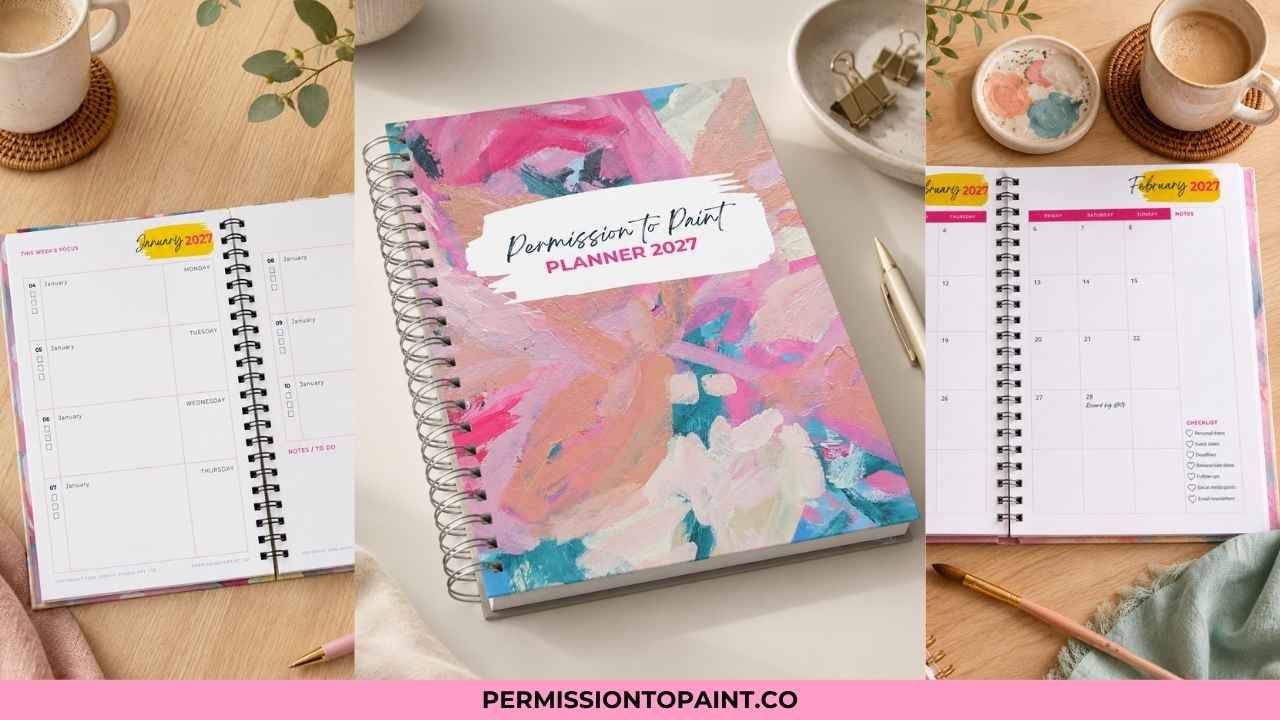
If this conversation has you thinking about who you are as an artist and what you want from your art, the 2027 Permission to Paint Planner is a lovely place to put those thoughts.
It's designed to help you map out your creative year in a way that fits your art, your ambitions and your real life. No one-size-fits-all formula. Just space to reflect, get clear on what matters to you, and plan your next steps.
It comes as a digital version you can start using straight away, plus a limited physical run that's printed and ready to ship. Once the printed copies are gone, they're gone.
Get your 2027 Planner here: https://www.permissiontopaint.co/planner
If you’re ready for more personalised support in building your art business, there are plenty of ways we can work together — from self-paced courses and practical resources to memberships and masterminds. Reach out here.
Ros x
Ros Gervay is an Australian artist and creative business coach who helps artists build sustainable, income-generating art businesses without burnout or compromise. She is the founder of Art for the Heart (AFH) — an online membership community for artists at all stages — and the creator of the Thrive Mastermind, a professionalisation container for artists ready to grow beyond the learning stage. Ros hosts the Paint Rest Repeat podcast, where she shares honest conversations about the art life, creative business, and what it really takes to get paid to do what you love. Based in Australia and working with artists worldwide. Learn more at permissiontopaint.co
Frequently Asked Questions
Can art really help you find yourself? For many artists, yes. Amy Kim returned to painting after losing touch with her identity through years of work and motherhood. Creating gave her a space where it was just her, the canvas and the brush, and over time that helped her reconnect with who she is.
How do I find my own art style? Start by getting curious rather than copying. Look for the colours, shapes and subjects that keep showing up in your work, and think about where they come from in your life. Experiment beyond your comfort zone. Try to limit how much you compare your work to other artists' feeds.
Does being authentic actually help sell art? It helps the right people find and remember you. Collectors often buy a connection to the artist and the story behind the work, not just the painting itself. The more your work is truly yours, the easier it is for the people who resonate with it to recognise it.
I stopped making art years ago. Is it too late to come back? Not at all. Amy stepped away from art for many years after art school and came back to it as a mother and teacher. Many artists find that the life they lived in between gives their work more depth, not less.
What is Amy Kim's 'Being' exhibition? 'Being' is a group exhibition Amy is curating with Sol Gallery. It explores how artists live with and move through their struggles, and how we still find joy. Artist talks are planned. Find the call-out and updates at byamykim.com.
How can I plan my art year around who I really am? Start with reflection before goals. Get clear on what matters to you and the capacity you actually have, then plan your next steps from there. The 2027 Permission to Paint Planner is designed to help you do exactly that.