How I Started to Sell My Art: 5 Mistakes I'd Never Make Again
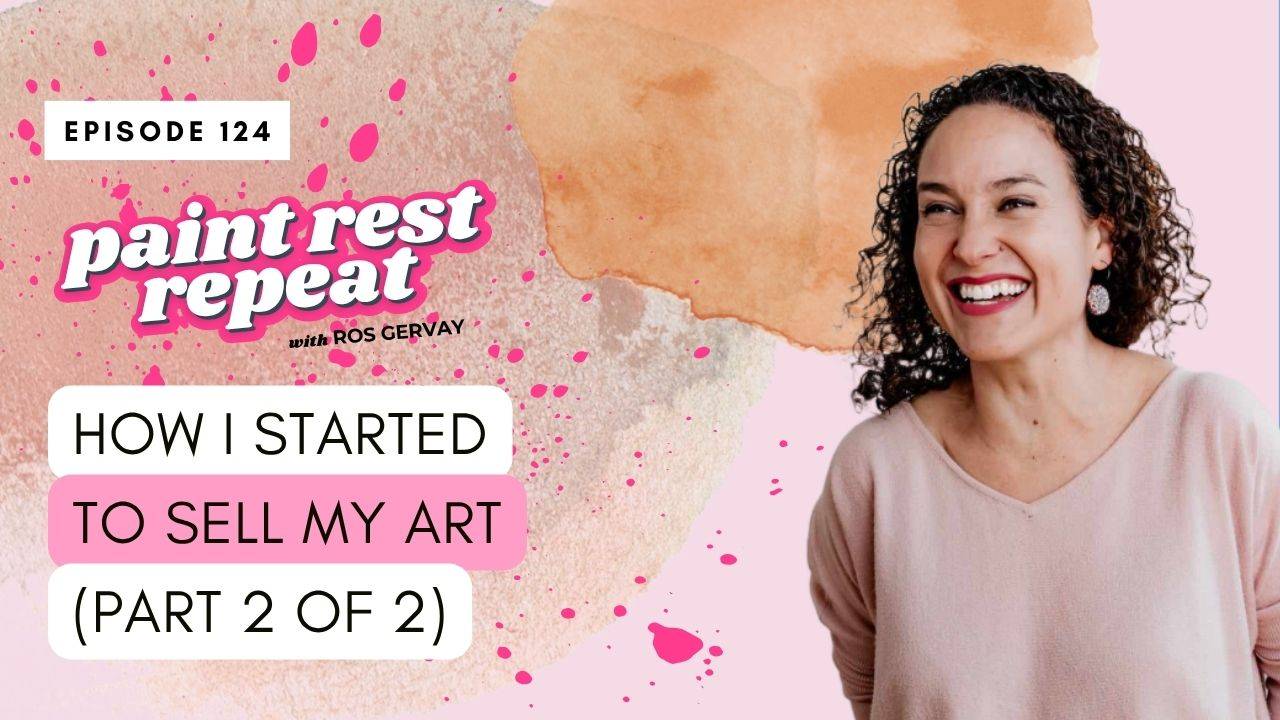
Episode 124 | Paint Rest Repeat Podcast for Artists
In a Nutshell: Last episode I shared what actually worked when I first started selling my art. This time I'm getting honest about what didn't — five mistakes that cost me time, confidence, and in some cases years of doing things the hard way. None of them happened because I wasn't committed enough. They happened because nobody showed me the potholes before I drove into them. This blog post walks through all five, and what I'd suggest you do instead.
Here for the links referenced in the episode?
Part 1: How I Started to Sell My Art: https://www.permissiontopaint.co/blog/start-selling-1
Join Art for the Heart (enrolment is open 9–17 September 2026 - or hop on the waitlist): https://www.permissiontopaint.co/afh
Episode 124: Listen using the player below, or click on your favourite listening platform to subscribe and listen there.

The mistakes nobody warns you about
If you caught Part 1, you'll know I walked through what actually worked when I first started putting my art out into the world and inviting people to buy it.
This one is the other side of that story. What didn't work. The mistakes I made. The stuff I wish someone had pulled me aside and told me before I spent months — honestly, years, in some areas — figuring it out the hard way.
Most of us learn to sell our art by trial and error, because nobody actually teaches us this stuff. So we cobble together a strategy from Instagram advice, a bit of guesswork, and whatever feels least terrifying that week. That's completely normal. I did exactly that. But it also means we make avoidable mistakes — not because we're not smart or not committed enough, but because nobody showed us the potholes before we drove straight into them.
And here's the sneaky part: these mistakes don't feel like mistakes while you're making them. Working alone doesn't feel like a mistake — it feels responsible, like you're just quietly getting on with it. Not having systems doesn't feel like a mistake — it feels flexible and free. It's only with distance that you can see how much time, energy and joy each one quietly cost you.
So if you're making some sales but it all feels a bit chaotic behind the scenes, or you're just starting out and want to skip a couple of years of unnecessary struggle, here are the five things I did that I wish I'd skipped.
Mistake 1: Looking at other people's art too much
I fell hard into what I call comparisonitis. I'd scroll, look at what other artists were doing, and quietly start second-guessing my own style. Is mine good enough? Should I be painting more like that?
It's such a sneaky trap, because it feels like research. Really, it's just eroding your confidence in your own voice, one scroll at a time.
What I've learned — and what I tell every artist I coach — is to stay in your own lane. Your style doesn't need to look like anyone else's to be valuable. In fact, the more your work looks like everyone else's, the harder it is for the right people to find and remember you. The artists who build something that lasts are the ones who keep developing their own voice, not the ones chasing everyone else's.
These days, if I catch myself scrolling and comparing, I treat it as a signal to close the app and go back to my own easel. Not because other artists' work isn't wonderful — it usually is — but because it's not useful information for growing my own voice. It's just noise dressed up as research.
This is actually one of the things community does differently for you. Instead of measuring yourself against strangers' polished feeds, you're surrounded by artists who show you the real, unfinished middle of their process too. It's a lot harder to feel behind when you're seeing people's actual journey, not just their highlight reel.
Mistake 2: Doing it alone
For a long time, I tried to figure all of this out solo. You can do that. But it's so much harder, so much slower, and honestly a pretty lonely way to build something.
Community changed everything for me. Having other artists around me, support from people who'd already walked this path — people who could give me not just the how-to, but help with the mindset side of things too. That combination is what made consistency possible for me. Not willpower. Not another plan I wrote alone on a Sunday night. Community.
There's something about knowing other people are in it with you, celebrating the small wins, understanding the specific kind of hard that selling your own creative work is, that willpower alone can't replace. It's the difference between white-knuckling your way through a slow month and having people around you who say, "Yep, I've been there. Here's what helped."
A lot of what turned things around for me — the community, the support, the accountability — is exactly what I built into Art for the Heart. It's the space I created because I needed it and couldn't find it.
Mistake 3: No systems
For way too long, I didn't have systems for anything. Nothing for what to post or when. Nothing for how to package and price my work. Nothing for fulfilling an order without it turning into a whole production. Every decision was made from scratch, in the moment, which meant everything took three times longer than it needed to.
Building even basic systems felt like a hassle to set up, but it paid for itself almost immediately. A simple content plan, so I wasn't staring at a blank cursor trying to think of a caption. A repeatable packaging process, so shipping a piece didn't eat up an entire afternoon of family time on a weekend. A few things automated, so they weren't relying on my memory or my energy levels that day.
It's not glamorous, and it's genuinely a bit tedious to set up. But it's the difference between an art business that runs, and one that runs you.
Mistake 4: Having no deadlines
This one is specific to how I'm personally wired. I need external dates and deadlines — real ones, not just "someday." Without them, projects drift and ideas stay ideas. I'd tell myself I'd finish a body of work soon, and soon would quietly become never.
Once I started setting real deadlines — and better yet, deadlines where someone else was expecting something from me by that date — everything moved. It could be an exhibition date, a workshop date, a commitment to a small group of people who'd notice if I didn't show up.
It's such a simple fix, and one of the most powerful ones on this list for me. If you know you need that external nudge too, there's no shame in it. It just means building deadlines into your art business on purpose, rather than hoping motivation shows up on its own.
Mistake 5: Putting my original art under pressure to sell
Early on, I expected my original paintings to pay the bills straight away, with nothing else in the mix. Every piece had this invisible price tag attached — this needs to sell, and soon. That pressure changes how you paint. It creeps into your decisions, and you start making what you think will sell instead of what you actually want to make. Slowly, it drains the joy out of the thing that got you here in the first place.
I want to be really clear about what this mistake actually was, because it wasn't wanting to sell originals. If your dream is to build your income primarily or entirely from your original art, that's a beautiful goal, and plenty of artists do build exactly that. My mistake was making my originals my only income stream from day one, before I'd had the chance to build a body of work or an audience.
So here's what I've learned, and what I recommend to most of the artists I coach — even the ones with their sights firmly set on originals as their main game: bring in a second income stream alongside your originals while you're building. Prints, workshops, commissions — whatever fits your work. Not instead of the dream, but alongside it, as scaffolding.
When your rent doesn't depend on this exact painting selling this exact month, you get to make the work you actually want to make. And you get the time and patience to build what a genuine originals-only income needs: a body of work, an audience, a reputation. It's often the fastest way there, not the slowest.
That said, only you know your numbers and your own path. If you're nodding along because you can feel that pressure sitting on your own originals, that's worth paying attention to. It doesn't mean giving up on originals as your income. It might just mean giving yourself some breathing room while you build, so your originals can carry your business without carrying all of it at once.
The light bulb moment
None of these mistakes happen because you don't have what it takes, or because you don't want it badly enough. They happen because you're trying to build an art business with no map, no support, no structure, and expecting yourself to figure it out through sheer effort alone.
The artists who build something sustainable aren't the ones who hustled the hardest, or were somehow born knowing how to do this. They're the ones who learned the systems, found the community, and built in the accountability that let their art stay the thing they love, while everything else quietly supports it underneath.
That's the shift. Not working harder. Learning what nobody taught you, with people around you while you do it.
Ready to stop figuring it out alone?
If any of these five mistakes sounded a little too familiar — the pressure on your originals, the comparisonitis, doing it all alone, no systems, no deadlines — that's exactly what I built the Art for the Heart Growth pathway to solve.
Inside, you get the community I didn't have. Other artists and experts who've already walked this path, so you're not guessing your way through the how-to or white-knuckling your own motivation. Practical tools and resources for the stuff that actually trips people up — what to post, how to package and price your work — so you're not making every decision from scratch alone. And a regular rhythm of live calls and check-ins with people who'll actually notice if you go quiet, so your business keeps moving forward instead of stalling in your someday pile.
Doors to Art for the Heart are open from 9 September 2026 until 17 September 2026, and you can start with a $7, 7-day trial before you commit to anything bigger.
Grab your spot at permissiontopaint.co/afh
If you're reading this after the 17th and doors have already closed, that's okay — they genuinely do close between rounds. Pop your name on the waitlist at the same link and you'll be first in line when they open again.
If you're ready for more personalised support in building your art business, there are plenty of ways we can work together — from self-paced courses and practical resources to memberships and masterminds. Reach out here.
Ros x
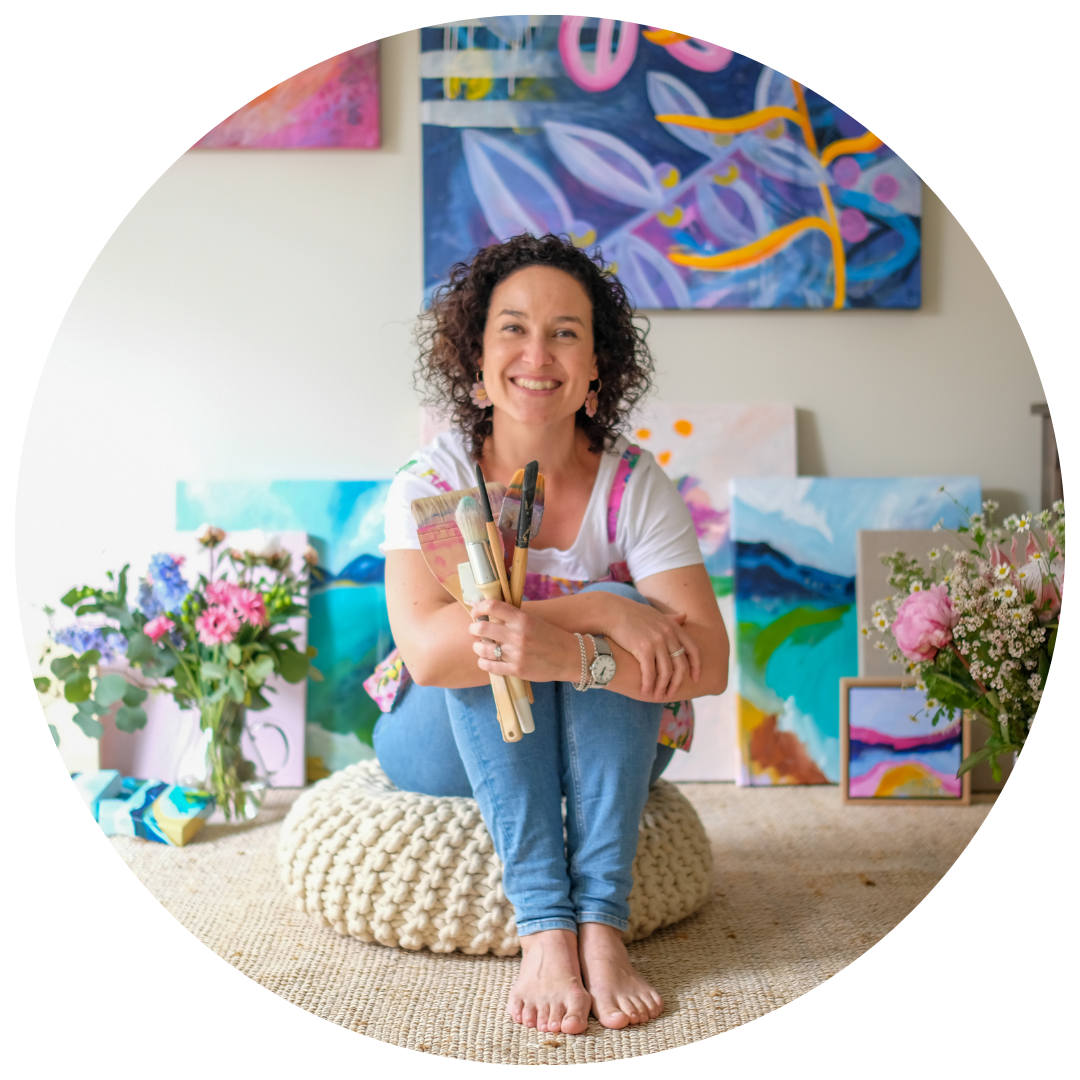
Ros Gervay is an Australian artist and creative business coach who helps artists build sustainable, income-generating art businesses without burnout or compromise. She is the founder of Art for the Heart (AFH) — an online membership community for artists at all stages — and the creator of the Thrive Mastermind, a professionalisation container for artists ready to grow beyond the learning stage. Ros hosts the Paint Rest Repeat podcast, where she shares honest conversations about the art life, creative business, and what it really takes to get paid to do what you love. Based in Australia and working with artists worldwide. Learn more at permissiontopaint.co.
Frequently Asked Questions
Do I need to have listened to Part 1 to understand this episode? No. This episode stands on its own, though Part 1 is a great companion if you want the full picture of what worked as well as what didn't.
Which of these five mistakes matters most? For most artists, comparisonitis, isolation and no systems are the ones quietly doing the most damage, because they don't feel like mistakes while you're making them. If you're only going to fix one thing, start with finding your people — community tends to solve the other two almost on its own.
Does this mean I shouldn't try to sell my original paintings? Not at all. It means not making your originals your only income stream from day one. Bringing in a second stream — prints, workshops, commissions — as scaffolding gives your originals room to breathe while you build an audience and a body of work.
I know I need deadlines and structure but I keep not doing it — what actually helps? External accountability, not more willpower. A deadline someone else is expecting you to hit, in a community that will notice if you go quiet, tends to work far better than another plan you write alone on a Sunday night.
Where can I get that kind of community and structure? Inside Art for the Heart's Growth pathway. Enrolment is open from 9–17 September 2026, with a $7, 7-day trial to test it out: permissiontopaint.co/afh