Marketing Your Art as an Introvert: A Gentler Way to Be Seen
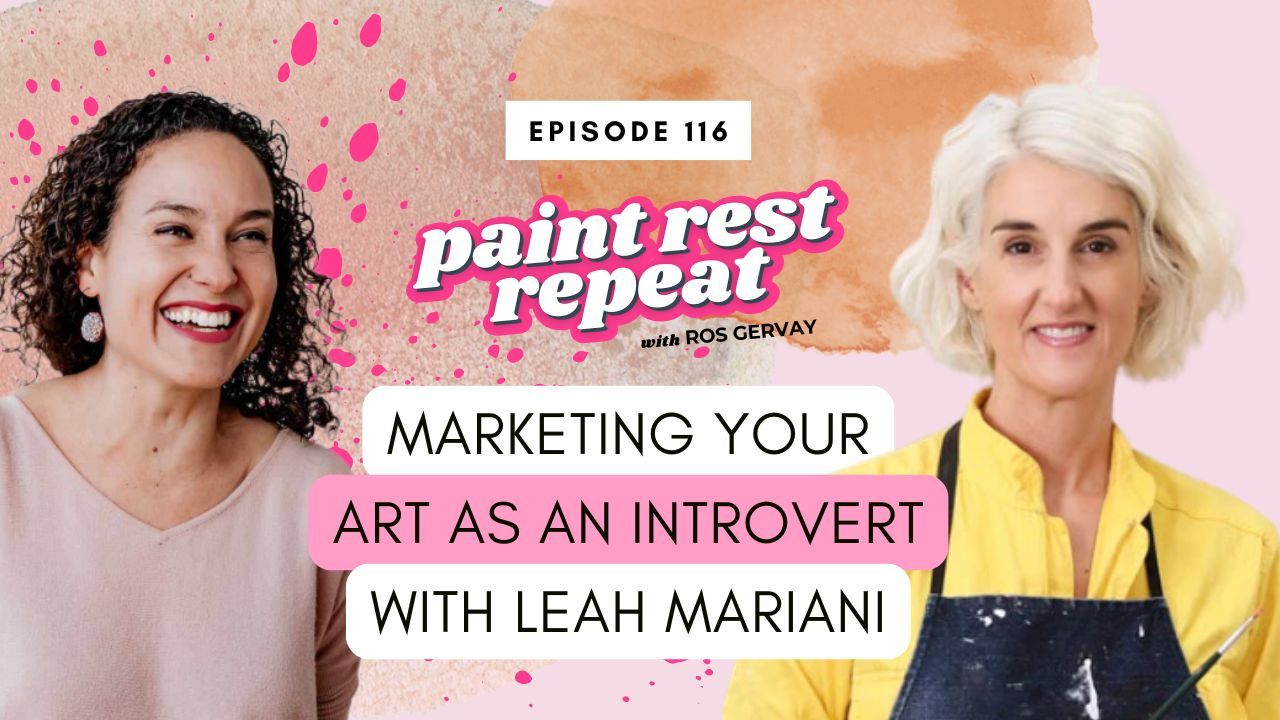
Episode 116 | Paint Rest Repeat Podcast for Artists
In a Nutshell Marketing for introverted artists doesn’t have to mean becoming louder, more extroverted, or constantly visible online. In fact, some of the most sustainable and effective art marketing strategies are quiet, thoughtful and relationship-based. If you’re an artist who finds social media draining, networking overwhelming, or self-promotion uncomfortable, this post will help you rethink what visibility can look like — and how to market your art in a way that honours your energy, creativity and personality.
Here for the links referenced in the episode?
Connect with Leah Mariani here 👉 https://www.instagram.com/leahmarianiartspace
Check out Chateau Orquevaux 👉 https://www.chateauorquevaux.com/
Leave a question for the podcast 👉 https://www.permissiontopaint.co/podcast
Episode 116: Listen using the player below, or click on your favourite listening platform to subscribe and listen there:



Marketing Your Art Doesn’t Have to Feel So Draining
If you’re an introverted artist, marketing your art can feel like the part of your creative practice that asks you to become someone else.
You might love painting in the studio, developing ideas, working quietly with your materials and reflecting deeply on your process. But then comes the part where you’re supposed to share it. Post the work. Talk about yourself. Write the caption. Send the email. Approach the gallery. Show up in stories. Explain the meaning behind the piece. Invite people to buy. And suddenly, the whole thing can feel incredibly exposing.
A lot of introverted artists assume this means they are bad at marketing. But often, that isn’t true at all. You may simply be trying to follow marketing advice that was built for a completely different kind of person.
The good news is this: marketing for introverted artists can be quiet, spacious, sustainable and still very effective. You do not have to become louder to be seen. You need to find a way of being visible that you can actually keep doing.
Why Traditional Art Marketing Advice Can Feel Hard for Introverts
Much of the marketing advice given to artists focuses on more. Post more. Share more. Network more. Sell more. Say more. Be more visible. And while visibility is important, more is not always better — especially if the strategy drains you so much that you avoid it altogether. For introverted artists, high-output marketing can quickly become overwhelming.
You may find yourself:
- Overthinking every caption before you post
- Feeling uncomfortable talking about yourself or your achievements
- Avoiding stories, reels or video because they feel too exposing
- Feeling drained after markets, openings or networking events
- Comparing yourself to artists who seem naturally confident online
- Disappearing for weeks because visibility starts to feel like too much
This doesn’t mean you lack discipline, ambition or professionalism. It means your marketing needs to be designed around your actual energy, not around what everyone else appears to be doing.
What Marketing for Introverted Artists Really Means
Marketing for introverted artists is not about doing less because you are afraid. It is about doing the right things in a way that is sustainable. Introverted marketing is often more thoughtful, intentional and relationship-driven. It allows you to build trust over time rather than relying on constant performance or high-energy visibility.
It may look like:
- Writing meaningful email newsletters
- Sharing slower, more thoughtful social media posts
- Creating evergreen content that keeps working over time
- Building genuine relationships with collectors
- Choosing fewer platforms and showing up consistently
- Letting people into your process without sharing every detail of your life
- Creating quiet systems that support your visibility behind the scenes
The aim is not to hide. The aim is to create a rhythm of visibility that feels honest and repeatable.
You Don’t Need to Be Loud to Be Visible
One of the biggest myths about art marketing is that visibility has to be loud. But visibility simply means allowing people to encounter, understand and connect with your work.
That can happen in many ways. It can happen through a thoughtful Instagram caption. It can happen through a behind-the-scenes studio photo. It can happen through a collector email. It can happen through a blog post that explains your inspiration. It can happen through a local exhibition, a small group show, a website update, a personal invitation or a quiet conversation with someone who loves your work.
For introverted artists, the most powerful marketing often comes from depth rather than volume. You may not want to post every day, but you might be excellent at writing about your work with honesty. You may not enjoy large networking events, but you might be wonderful at one-on-one conversations. You may not want to film your whole life, but you might be able to share small glimpses of your materials, process and studio rituals. These are strengths. Use them.
Start With Your Energy, Not the Algorithm
A common mistake artists make is building their marketing plan around the algorithm instead of their own capacity.
They ask:
“What does Instagram want from me?”
“What is everyone else doing?”
“How often should I post?”
“What kind of content performs best?”
These questions can be useful, but they should not be the foundation.
A better starting point is:
“What can I repeat consistently without burning out?”
Because the best marketing strategy is not the one that sounds impressive. It is the one you will actually do.
For an introverted artist, that might mean creating a simple weekly rhythm:
- One social media post about your current work
- One email or studio note each fortnight
- One website or blog update each month
- One personal collector touchpoint each week
- One day each month to batch content quietly
This kind of rhythm may not look flashy, but it builds trust. And trust is one of the most important parts of selling art.
Choose Marketing Channels That Suit Your Personality
You do not need to be everywhere to market your art well.
That said, if you do have the space, energy and inclination, repurposing your content across multiple channels can be a smart way to achieve an “everywhere approach" without creating from scratch each time.
In fact, trying to be everywhere by creating completely separate content for every platform is one of the fastest ways to exhaust yourself.
Instead, choose the channels that suit both your audience and your energy.
Email Marketing
Email can be a beautiful tool for introverted artists because it allows for slower, more thoughtful communication. You can write directly to people who have chosen to hear from you. You can share the story behind a painting, invite people into your process, announce new work, or reflect on what is happening in your studio. Unlike social media, email does not require you to compete with an algorithm in the same way. It also creates a more personal connection with collectors and supporters.
Social Media
Social media can still be useful, but it does not need to consume your life. For introverted artists, social media often works best when it is simple and structured. Rather than trying to share everything, focus on repeatable content types.
For example:
- Finished artwork posts
- Studio process photos
- Short reflections on what inspired a piece
- Work-in-progress updates
- Gentle invitations to join your email list
- Stories that show small moments rather than constant face-to-camera content
You do not have to perform your personality to be present.
Your Website
Your website is an important part of your quiet marketing system. It can hold your artwork, artist statement, biography, contact details, available works, exhibition history, newsletter sign-up and blog content. For introverted artists, a strong website can do some of the explaining for you. It gives people a place to learn about your work without you needing to repeat the same information constantly.
Blog Posts and Evergreen Content
Evergreen content is content that remains useful over time. This might include blog posts about your process, materials, themes, inspiration, studio practice or the story behind a collection. For introverted artists, evergreen content can be especially helpful because it allows you to create something once and let it keep supporting your visibility in the future. Instead of relying only on constant posting, you are building a library of content that helps people discover and understand your work.
Build Relationships Without Forcing Constant Networking
Many introverted artists dislike the word networking because it can sound transactional or performative. But relationship-building does not have to look like walking into a room full of strangers and trying to sell yourself. It can be much quieter than that.
It might look like:
- Sending a thoughtful thank-you message to someone who came to your exhibition
- Following up with a collector after they purchase a piece
- Commenting genuinely on another artist’s work
- Inviting a past buyer to preview a new collection
- Sending a personal note to a curator, designer or local creative
- Staying in touch with people who have shown interest in your work
This kind of relationship-building is often where introverted artists shine. You do not need hundreds of shallow connections. You need genuine, thoughtful points of contact that build trust over time.
And if you’d love a supportive place to build genuine creative relationships without the pressure of traditional networking, you can join Gather — our free in-person community for artists here: https://www.permissiontopaint.co/gather
Use Boundaries as Part of Your Marketing Strategy
Introverted artists need boundaries around visibility. This is not a weakness. It is a practical part of building a sustainable creative business.
Without boundaries, marketing can start to leak into every part of your life. You may feel like you should always be documenting, responding, posting or checking your phone. That is exhausting.
Helpful boundaries might include:
- Choosing specific days for content creation
- Turning off notifications while you are painting
- Setting office hours for admin and messages
- Deciding in advance how often you will post
- Taking recovery time after exhibitions, launches or events
- Not sharing parts of your life that feel too private
Boundaries help you stay consistent because they protect the energy that your art actually requires.
Create Before You Consume
For introverted artists, comparison can be particularly draining. If you start your day by looking at what everyone else is posting, selling, launching or achieving, it can become much harder to hear your own creative voice.
A simple but powerful rule is this: Create before you consume.
Before you scroll, check metrics, reply to messages or look at other artists’ work, give your own practice your first attention. This might mean painting first. It might mean journalling about a new body of work. It might mean writing a caption before opening Instagram. It might mean spending ten minutes with your sketchbook before checking email.
When you create before you consume, your marketing starts to come from your own work rather than from comparison.
Reframe Self-Promotion as Service
Many introverted artists feel uncomfortable with self-promotion because it can feel like asking for attention. But marketing your art is not just about promoting yourself. It is about helping the right people find the work that may move them, comfort them, challenge them, inspire them or belong in their home. When you share your art, you are not demanding attention. You are creating an invitation.
You are saying:
“Here is what I made.”
“Here is why it matters to me.”
“Here is the story behind it.”
“Here is where you can see more.”
“Here is how to bring it into your life if it speaks to you.”
That is not pushy. That is generous.
The Role of Space and Environment
In Episode 116 of Paint Rest Repeat, artist Leah Mariani shares how an artist residency in the French countryside helped her feel refreshed, motivated and inspired. What stands out about Leah’s experience is the balance of solitude and connection. She had time to work independently, but she was also surrounded by other artists and writers. She could join the group for meals and conversation, then return to her own work when she needed space. For introverted artists, this kind of environment can be incredibly powerful. It shows that community does not have to mean constant interaction. Support does not have to mean pressure. Being around other artists can fill your cup when the environment allows you to tap in and out in a way that honours your energy. This matters for marketing too.
The right environment can help you feel more confident, more supported and less alone as you share your work with the world.
Practical Marketing Ideas for Introverted Artists
If you are looking for gentle ways to become more visible, try starting with one or two of these:
- Write a Monthly Studio Letter: Send a simple email once a month sharing what you are working on, what has been inspiring you, and any available works or upcoming opportunities.
- Create Artwork Story Posts: Instead of simply posting a finished piece, share the story behind it. What sparked it? What were you exploring? What changed while you were making it?
- Batch Your Content: Set aside one recurring quiet block of time to write captions, photograph work or plan posts. This reduces the daily pressure of deciding what to say.
- Make a Collector Care List: Keep a simple list of people who have purchased from you, enquired about your work, or supported your practice. Check in thoughtfully over time.
- Use Templates: Templates can make marketing feel less overwhelming. Create simple structures for newsletters, captions, artwork descriptions and collection release emails.
- Share Process Without Oversharing: You can show your palette, studio table, brush marks, sketches, packaging or details of a painting without sharing parts of your life that feel too personal.
- Choose One Main Platform: Instead of trying to be everywhere, choose the platform where your audience is most likely to connect with your work and focus your energy there.
- Practise Gentle Calls to Action: A call to action is simply the next step you invite your audience to take. It does not need to feel salesy. Try phrases like “You can view the full collection through the link in my bio” or “Send me a message if this piece speaks to you.”
A Simple Weekly Marketing Rhythm for Introverted Artists
Here is an example of a quiet, sustainable weekly rhythm:
Monday: Photograph or document what is happening in the studio
Tuesday: Share one process post or story
Wednesday: Work on your email newsletter or website update
Thursday: Reach out to one collector, supporter or creative contact
Friday: Share one finished artwork, reflection or invitation
Weekend: Rest, create, or step away from marketing completely
This is only an example. The point is not to follow it perfectly. The point is to create a rhythm that removes decision fatigue and helps visibility feel less chaotic.
The Real Goal: Sustainable Visibility
The goal of marketing for introverted artists is not to become endlessly available. It is not to turn your whole life into content. It is not to override your need for quiet, depth or solitude.
The goal is sustainable visibility. That means creating ways for your work to be seen, understood and remembered without constantly draining yourself in the process. You are allowed to market quietly. You are allowed to build slowly. You are allowed to choose depth over noise. You are allowed to protect your creative energy while still taking your art business seriously.
If you’re ready for more personalised support in building your art business, there are plenty of ways we can work together — from self-paced courses and practical resources to memberships and masterminds. Reach out here.
Ros x
Ros Gervay is an Australian artist and creative business coach who helps artists build sustainable, income-generating art businesses without burnout or compromise. She is the founder of Art for the Heart (AFH) — an online membership community for artists at all stages — and the creator of the Thrive Mastermind, a professionalisation container for artists ready to grow beyond the learning stage. Ros hosts the Paint Rest Repeat podcast, where she shares honest conversations about the art life, creative business, and what it really takes to get paid to do what you love. Based in Australia and working with artists worldwide. Learn more at permissiontopaint.co
Frequently Asked Questions
What is the best marketing strategy for introverted artists? The best marketing strategy for introverted artists is one that feels sustainable. This may include email marketing, thoughtful social media posts, evergreen website content, relationship-building with collectors, and simple weekly visibility rhythms. The goal is to show up consistently in ways that suit your energy.
How can introverted artists promote their work without feeling salesy? Introverted artists can promote their work by reframing marketing as an invitation rather than a performance. Share the story behind your work, explain your process, offer clear ways to view or buy available pieces, and speak to the people who genuinely connect with what you create.
Do artists need to post every day on social media? No. Artists do not need to post every day to market their work effectively. Consistency matters more than frequency. A few thoughtful, well-written posts each week can be more sustainable and more effective than daily posting that leads to burnout.
Is email marketing good for artists? Yes. Email marketing can be especially helpful for artists because it allows you to build a direct relationship with collectors, supporters and people interested in your work. It is also a quieter and more intentional form of communication than relying only on social media.
How can introverted artists build confidence with visibility? Introverted artists can build confidence by starting with small, repeatable actions. This might include sharing one studio update per week, sending a monthly newsletter, writing artwork descriptions, or reaching out personally to past collectors. Confidence often grows through consistent, manageable practice.
How do I market my art if I hate networking? If you dislike traditional networking, focus on relationship-building instead. Send thoughtful messages, follow up with collectors, connect with other artists one-on-one, invite people to your email list, and create genuine conversations around your work. Networking does not have to be loud or performative.
Can introverted artists be successful? Yes. Introverted artists can build successful, sustainable and visible art practices. Introversion can be a strength when your marketing is built around depth, thoughtfulness, consistency and genuine connection rather than constant performance.