Growing Your Mailing List to Sell More Art with Tash Corbin
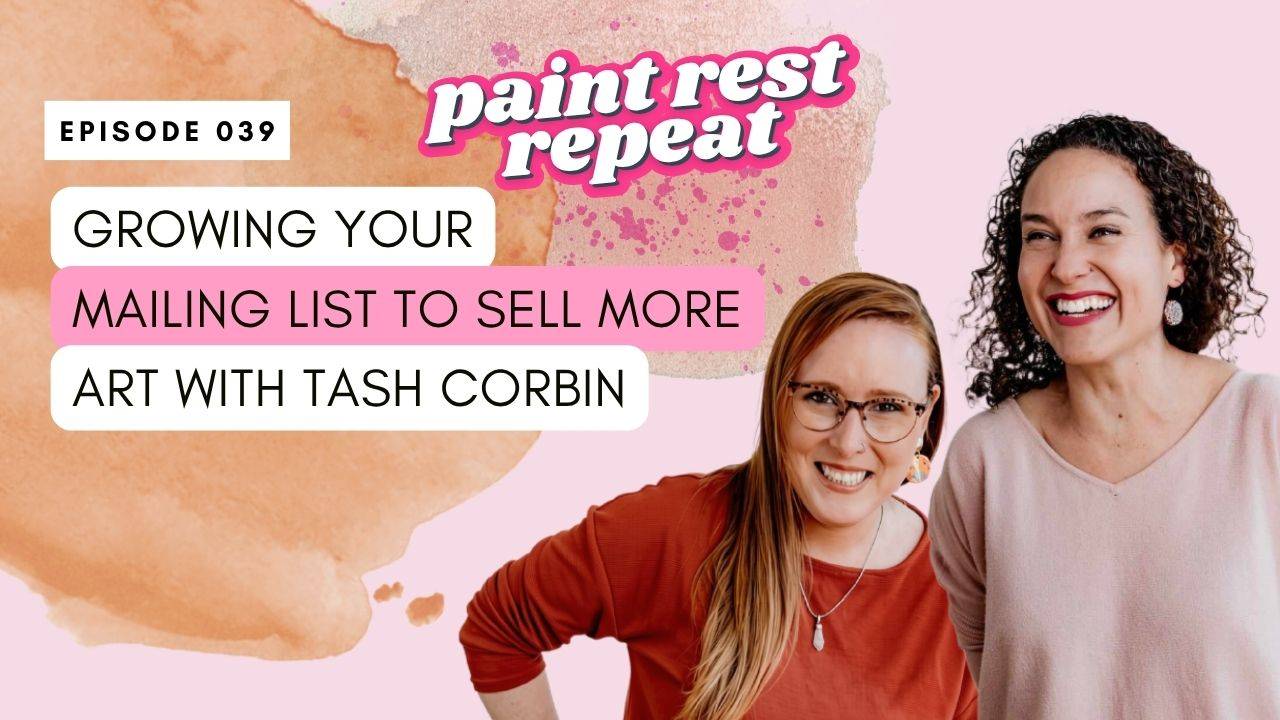
Episode 39 | Paint Rest Repeat Podcast for Artists
In a Nutshell: An email list is one of the most valuable things you can build as an artist. Everyone on it has chosen to hear from you, and unlike social media, every email actually lands in their inbox. In this episode, my then co-host Laura Jane Day and I talk with heart-centred business coach Tash Corbin about how artists can grow a mailing list and use it to sell art, without feeling spammy or salesy. We cover how often to email, who you're really writing to, why consistency builds trust, how to move followers from Instagram onto your list, and how to make marketing fit around a busy life.
If the idea of emailing people makes you want to hide under your easel, this conversation might change your mind.
Here for the links referenced in the episode?
Tash's website: tashcorbin.com
Tash on Instagram: @tashcorbin
Download The Real-Life Artist's Guide to Your Next Art Biz Move: https://www.permissiontopaint.co/art-business-guide
Episode 39: Listen using the player below, or click on your favourite listening platform to subscribe and listen there.



Marketing that doesn't feel icky
Tash Corbin is a heart-centred business coach whose work has inspired so many creative business owners. She has run her business since 2013, supporting women and non-binary people to create and grow online businesses using consent-based marketing. That means no pushy tactics and no psychological trickery. Just genuine connection, which also happens to convert really well.
She came to this way of working because the marketing being taught when she started didn't sit right with her. And many of the healers, artists and creatives she supported back then didn't like it either.
That's exactly why this conversation matters for artists. So many of us find pushy selling deeply uncomfortable, and that discomfort can become a real block to earning from our creative work. Tash's approach shows there's another way.
What a mailing list is (and the tools that make it easy)
A mailing list is simply a collection of email addresses from people who have given you permission to send them updates, stories and offers.
There are privacy and consent laws around this. People must have opted in, and every email needs an unsubscribe option. The good news is that email marketing platforms handle most of that for you.
When we recorded this episode, Tash's favourite tool for beginners was MailerLite, because its free plan had so much functionality for small lists. (She's not an affiliate, and plans change, so check what's currently on offer.)
A platform like this lets you create a sign-up form for your website, or a page where people can grab a free resource from you and join your list at the same time.
Your list is a party at your place
This is one of my favourite analogies from Tash.
Social media is like being out and about, hanging out in cafes and groups. Your mailing list is inviting people back to your place for a party.
And if you invite people to a party, you need to be a good host. Be in the room. Make sure people know where the food and drinks are. In email terms, that means getting in touch with your people consistently.
Here's what often happens instead. Because we're so worried about being annoying and spammy, we swing to the other extreme and never email anyone at all. I see it with artists I work with all the time. They've collected email addresses because I suggested it, and then... nothing.
Tash's reminder is a powerful one. Every single person on your list chose to be there. They actually want to hear from you.
Who you're really writing to
Many artists get stuck on the question of their niche. Tash's advice for artists was refreshingly simple.
Unlike, say, a web designer who needs to know exactly whose websites they're building, artists have a lot of freedom here. Your art is very visual, and that visual work is the perfect siren call for the people who love it. Trust that your people are the ones who are drawn to your art, interested in your process, or inspired by what you make.
Write as if they want to buy
Here's the shift that changes everything. When you write to your list, don't picture people who just like to look. Picture someone who is actively looking for artwork to buy.
Tash sees a pattern with lots of artists. Their behind-the-scenes emails are proud and excited. But the moment there's an exhibition or a piece for sale, the energy turns apologetic. "I'm so sorry to tell you, but this one's for sale."
Assume instead that everyone on your list would love one of your pieces on their wall, whether that's today or a few years from now. Then telling them how to buy from you feels natural, not awkward.
How often should artists email their list?
Tash's answer: start with what you know you'll nail.
Consistency builds trust
People buy from people they trust. That matters even more with art, because buyers are often spending a significant amount online and hoping the artwork arrives as expected.
One of the biggest things that erodes trust is unpredictable behaviour. If you show up three weeks in a row, then disappear for three months, it plants a seed of doubt, consciously or not. Is this person legit? Will they actually complete my commission?
But if you tell people you send an email on the first Friday of every month, and then you do exactly that, you're building trust every single time.
Tash's suggested rhythm
- Start monthly. Get consistent with that first.
- Move to fortnightly once monthly feels easy. Watch your open rates, replies and clicks as you go.
- Go weekly only if you have the value to back it up, like a fascinating process to share each week, or a high volume of new work.
For most artists, Tash felt twice a month is plenty. Think about it: that's 24 emails a year. That's 24 chances to connect, and 24 opportunities to sell.
Why email beats social media
In an earlier episode, artist Maggi McDonald told us people often need to see an artwork around nine times before they buy. (You can read more from Maggi in How to Licence Your Art with Maggi McDonald.)
Tash explained why email gets you there faster. On social media, she estimates that even keen followers might only see around one in every 16 posts you share. People who don't follow you see far fewer. But every email lands in the inbox. You can rack up those views much faster, and much more reliably.
Making it work around a busy life
Lots of our listeners are juggling day jobs, families and everything in between. So we asked Tash how to build a business, and an email habit, that actually fits.
Progress over perfection
Tash's view is that the biggest killer of consistency is perfectionism. You don't need the perfectly worded newsletter with perfect visuals sent at the perfect time.
If all your list gets this month is a photo of the last thing you made and a little note saying life's been busy, but you carved out four hours for your art and it filled your cup, that's wonderful. People love behind the scenes. And at least they've heard from you.
Focus on your warmest people first
If you only have 30 minutes this week, start with your hottest audience: your mailing list. Next are the people who already follow you, so Instagram stories and feed posts. Only then move out to colder audiences.
Viral reels with tens of thousands of views are lovely for the ego. But they don't necessarily bring the best return on your limited time.
Every subscriber counts
It's so easy to think, "I've only got 15 people on my list, so it doesn't count." Tash's response: those are the 15 people in the world most likely to be your next buyers. Love on them really hard.
The same goes for sales to friends and family. That sale to your sister or your old neighbour? It counts. The money counts, and so does your art hanging on their wall.
Make marketing feel more like you
Tash's other tips for keeping marketing manageable:
- Protect your creating time. The fastest way to resent your business is doing things you don't want to do for no result. If marketing isn't your favourite, prioritise the art and put a boundary around the marketing.
- Use a timer. Tash uses a little Pomodoro cube. Thirty minutes, three times a week, feels doable, a bit like exercise.
- Market in your strengths. Love writing? Write. Love video? Make videos. Love the visual side? Lead with visuals.
- Let your schedule reflect your priorities. Tash shared an idea from Elizabeth Gilbert: how you allocate your time shows your real priorities. If housework always comes first, it becomes the priority. If your art matters, put it first.
(For more on building a business around real life, have a read of How to Build an Art Business Around Real Life.)
Asking for help is a business skill
This part of the conversation got a little bit feminist, and it was one of my favourite moments.
In her classes, Tash asks women to imagine how a fictional, entitled middle-aged man (she calls him Steve) would approach things. Would budding artist Steve clean the whole house and make sure his workspace was immaculate before he let himself paint? No.
Particularly for women, there can be an automatic expectation that we're in charge of the children, the meals and the cleaning. It's worth asking whether the things you use as reasons not to paint are actually your job, or standards you've absorbed.
Tash also encourages women, once they get started, to consider getting help at home. No one is paying you to clean your toilet. Outsourcing it creates space, and it's brilliant practice at asking for your needs to be met. That's a skill you'll need when a gallery asks how you'd like your exhibition hung.
And remember, it gets easier. The things that feel hard today will feel easier next time. Your first Instagram live is terrifying. A few years later, it can feel like chatting with friends.
How to move followers from Instagram to your email list
You can't put clickable links in Instagram captions, so Tash suggests using the space you do have strategically.
- Your profile link. Point it to your newsletter sign-up, not your website or gallery. Your Instagram already is a gallery. Once people are on your list, your emails will lead them to your website.
- Stories. Set a weekly reminder to share a story that ends with an invitation to join your list. For example: a finished piece, then a frustrating behind-the-scenes moment, then "want to see more? Join my mailing list."
- Offer to DM the link. On a post or reel, simply say, "If you'd like to join my mailing list, let me know and I'll send you the link." People who've had a one-to-one conversation with you are far more likely to actually follow through.
(Want more Instagram strategy? You might like Why You're Not Making Art Sales on Instagram with growth coach Jade Warne.)
You don't need a call to action on every post
Most people feel relieved when they hear this one. You don't need a call to action at the end of every single post.
If every post ends with a pitch or an instruction, it starts to feel like walking through a shopping centre. And instructions like "comment below and tell me your favourite..." can actually stop people from engaging. Sometimes they just want to say, "That's gorgeous."
(Confession: "comment with a love heart if you like pink" posts have definitely appeared on our feeds. Tash's answer made us rethink them.)
Social media is meant to be social. People are there to be inspired, entertained and connected. So share a thought or a moment like you would with a friend. If you post, "It took me six hours to convince myself to start, and ten minutes to finish," people will jump in with "I did that yesterday!" all by themselves.
Show up as a human
We often feel we need to show up online as a polished professional. Tash did the same in her early days, only posting photos in full makeup and a shoulder-padded jacket. But people connect with people.
She loves following an artist who finally shared an unfinished piece after talking herself into it for 20 days. Tash was right there in the comments, cheering her on. Your followers aren't looking for flaws. They want you to succeed. Give them the chance to support you, and you'll get far more engagement than any instruction ever could.
(Amy Kim talks beautifully about this in How Art Helps Us Find Ourselves (and Why Being You Sells).)
A rising tide lifts all boats
I loved how Tash closed our conversation. She told our listeners to make the most of her free resources guilt-free, because her paid programs aren't designed for artists. She'd rather artists work with someone who understands the decisions we face, like balancing artistic integrity with commercial appeal.
Her bigger hope is that more people see art as a legitimate career choice straight out of school, rather than discovering it in their 40s after years in a job that didn't fit. That takes all of us showing up and succeeding. And your email list is a wonderful place to start.
Not sure what to focus on first?
Starting an email list, sharing more on Instagram, making more art, approaching galleries. When there's so much you could do, choosing what to do next is often the hardest part.
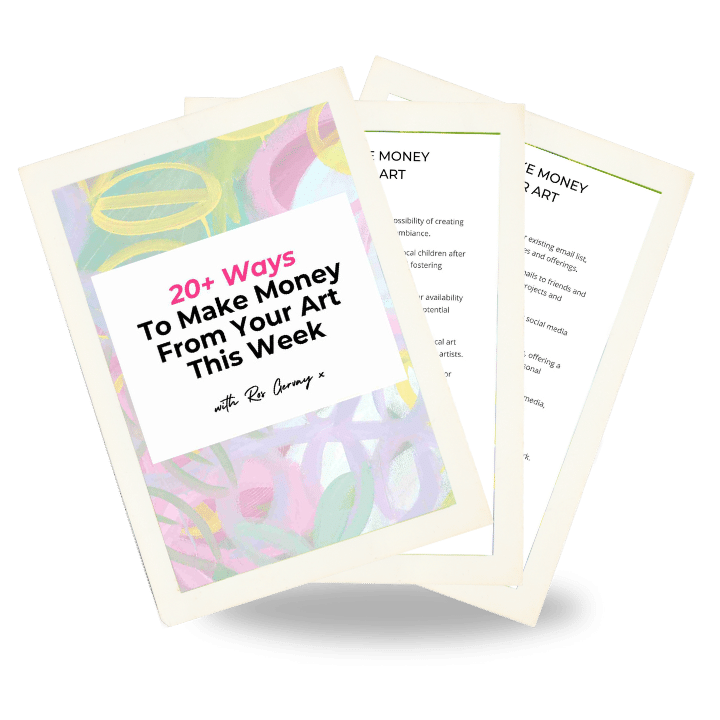
The Real-Life Artist's Guide to Your Next Art Biz Move is a free, practical 16-page resource to help you cut through the overwhelm and identify what matters most in your art business right now.
It includes:
- A Focus Area Finder
- A simple five-hour action path
- A printable Art Biz Move Card
- Practical prompts to help you follow through
Just a calm, realistic way to choose your next move, with no hustle-culture guilt spiral in sight.
If you're ready for more personalised support in building your art business, there are plenty of ways we can work together, from self-paced courses and practical resources to memberships and masterminds. Reach out here.
Ros x
Ros Gervay is an Australian artist and creative business coach who helps artists build sustainable, income-generating art businesses without burnout or compromise. She is the founder of Art for the Heart (AFH), an online membership community for artists at all stages, and the creator of the Thrive Mastermind, a professionalisation container for artists ready to grow beyond the learning stage. Ros hosts the Paint Rest Repeat podcast, where she shares honest conversations about the art life, creative business, and what it really takes to get paid to do what you love. Based in Australia and working with artists worldwide. Learn more at permissiontopaint.co.
Frequently Asked Questions
Why do artists need an email list? Everyone on your email list has chosen to hear from you, and every email reaches their inbox, unlike social media posts, which only a fraction of your followers see. That makes your list one of the best places to build trust and sell your art.
How often should artists send emails to their list? Start with a frequency you know you can stick to, such as once a month. Once that feels easy, consider moving to every two weeks. Weekly emails can work if you have plenty of new work or process to share.
What should artists write in their newsletters? Behind-the-scenes moments, new work, your process, upcoming exhibitions and pieces for sale. Write as if your readers would love to own your art one day, so sharing what's available feels natural rather than apologetic.
How do I get Instagram followers to join my email list? Put your newsletter sign-up link in your Instagram profile, invite people to join in your stories, and offer to send the sign-up link by DM to anyone who's interested.
What email platform should artists use? Choose a platform that handles consent and unsubscribes for you and has a free or low-cost plan for small lists. When this episode was recorded, Tash Corbin recommended MailerLite for beginners, but check current plans before you choose.
Is a small email list worth emailing? Absolutely. The people on a small list are the people most likely to become your next buyers. Look after them well and keep showing up consistently.
Do I need a call to action in every social media post? No. Constant instructions can feel salesy and may reduce engagement. Share genuinely, like you would with a friend, and invite people to your mailing list once or twice a week instead.