How to Licence Your Art with Maggi McDonald
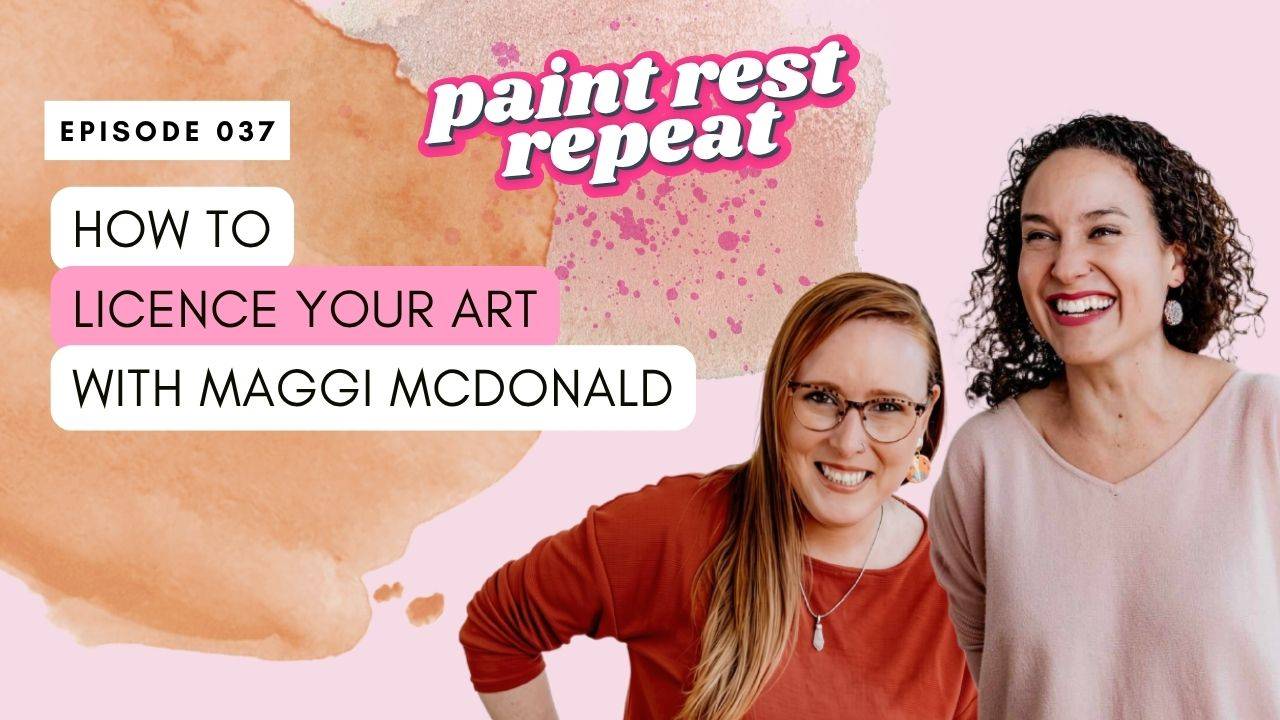
Episode 37 | Paint Rest Repeat Podcast for Artists
In a Nutshell: Art licensing means a company pays to use your artwork on its products, like fabric, wallpaper, homewares, clothing or stationery. It can be a wonderful extra income stream, and it often leads to repeat work, great content and lasting brand relationships. In this episode, my then co-host Laura Jane Day and I chat with Sydney abstract artist and surface designer Maggi McDonald about how her licensing deals began, how she prepares her artwork, what to put in a licence, and three ways to approach brands yourself. Maggi also shares the honest truth about her first two years, and why consistency is what opens doors.
If you've ever looked at a gorgeous cushion or wallpaper and thought "I'd love to see my art on that", you'll come away with a clear picture of how it works.
Here for the links referenced in the episode?
Maggi's website: maggimcdonald.com
Maggi on Instagram: @maggimcdonaldart
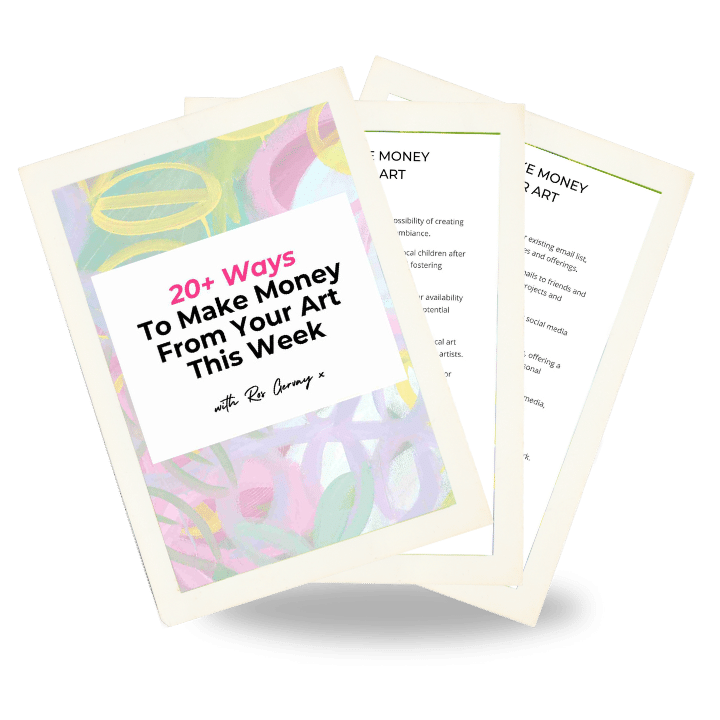
Download The Real-Life Artist's Guide to Your Next Art Biz Move: https://www.permissiontopaint.co/art-business-guide
Episode 37: Listen using the player below, or click on your favourite listening platform to subscribe and listen there.



From "you'll never make money as an artist" to full-time
Maggi grew up in South Africa in a very creative family. Her mum is a ceramicist with a studio at home, and Maggi always dreamed of being an artist. But when she finished school, it simply wasn't presented as an option. You'll never make money as an artist, right? We've all heard that one.
So life went in other directions. She moved to Australia, worked in lots of different jobs, and even ran a little cupcake business at one point, always searching for a creative outlet.
Then came a very painful season of loss. In the middle of it, Maggi realised that life is short and she needed to do the thing that set her on fire. When her son started kindy, she enrolled in design school at 36 and studied for two years, doing assignments every weekend.
She started playing with paint, sold a few pieces to friends, and her mother-in-law commissioned several paintings. She began sharing her work on Instagram in its early days, and kept going.
When we recorded this episode, Maggi had been on her art journey for around seven years. She was painting full-time, selling original abstract art, licensing her designs, launching a canvas print collection, and teaching social media workshops for creatives.
Her joyful, bold use of colour grew directly out of that difficult time. Art became part of her healing, and it's now part of her story.
(If you came to art later in life too, you might love Starting Later as an Artist and Why You're Not Behind.)
What is art licensing?
Art licensing is when a company pays to use your artwork on a product it's creating. That could be bedding, clothing, stationery, wallpaper, fabric or homewares. With digital printing, you can now print on almost anything.
Unlike selling an original, you keep ownership of your artwork. You give the company permission to use it in an agreed way, for an agreed time.
Most of Maggi's licensing opportunities came to her through Instagram. A brand would spot her work and say, "We really love this specific artwork. Could we license it?" Sometimes it was that simple.
Her very first licensing deal came just after she finished her surface design diploma. A Paddington design studio approached her to create a wallpaper and fabric collection. She ended up designing around 10 to 12 designs for each, which were still being printed when we recorded.
How to prepare your artwork for licensing
Two ways to create licensable designs
Maggi always starts with a hand-painted design on paper or canvas. From there, she has two options:
- Turn it into a repeat pattern. She imports the artwork into Illustrator or Photoshop and plays with it, manipulating brushstrokes into new designs. Most companies prefer repeat patterns, where your square of art repeats seamlessly across the fabric with no visible lines.
- Supply a high-resolution image. Some companies are happy with a high-res image of your artwork, and their in-house designers create the repeat themselves.
You don't need to be super tech-savvy. Maggi admits she's never quite got her head around Procreate. She's a desktop person who learnt Illustrator in her surface design course.
Get your artwork captured properly
This part is non-negotiable. You can't photograph a painting on your phone and expect a company to print from it. The image needs to be captured at a resolution that can be reproduced, with no pixels showing.
Your options include:
- A professional photographer who specialises in artwork
- A high-resolution scanning service
- Specialist digital capture services, available in some capital cities
Maggi spent ages trying to photograph her own work before deciding to outsource it. She now works with a local photographer, and it's freed up a lot of her time.
How to price an art licence
When Maggi started, there was very little information about how to charge for licensing. She worked it out as she went, and now uses a basic licence and a simple contract she's refined over the years.
What to include in your licence
- A time period. For example, a 12-month licence.
- A specific industry. License the image for one industry, such as homewares or stationery. What the company earns from your design should relate to what you charge, so be clear about where it can be used.
- What you're supplying. Image only, or a finished repeat pattern.
To give you a sense of numbers, when we recorded this episode, Maggi's licences started from around $500 for a 12-month, image-only licence. In her early days, she charged closer to $100 or $120.
Why a smaller fee can still be worth it
Maggi's view is that, especially at the start, licensing is as much about collaboration as money. A smaller deal can still give you:
- A new collaboration and a new audience
- The thrill of seeing your art on a cushion, blanket or wallpaper
- A relationship with the brand, and much of her licensing has turned into repeat work
- Beautiful professional content, because brands photograph your designs on their products
She's also very open in her conversations. She'll often say something like, "I'd love to work with you. What did you have in mind? I'm happy to look at your budget so we can collaborate." Then she decides whether it's worth her while, given the work involved.
Of course, make sure you're covering yourself. Just stay open to opportunities as you build.
Commissions for brands work differently
Maggi has also painted original commissions for companies. In that case, the original artwork belongs to the company and might hang in their head office. She has it professionally captured and keeps the high-res file, and the piece becomes part of the brand's design story.
Licensing can be a really steadying income stream too. In quieter times, when original sales are slower, licensing deals helped Maggi pay the bills and buy her art supplies.
(For more ways to build a mix of income streams, see Ideas to Help You Make More Money From Your Art.)
3 ways to approach brands about licensing your art
Waiting for a brand to find you on Instagram is one option. But I wanted to know how you can be a bit more proactive. Maggi admitted that she tends to let opportunities come to her, but she shared three great approaches.
Start by making a list of brands you genuinely love and follow them on social media. In Australia especially, many brands love bright colour and actively feature Australian artists on their packaging, clothing and homewares.
1. Watch for call-outs and design competitions
Many brands run regular call-outs for artist submissions, and some hold an annual design competition. Brands that do this are usually very open to hearing from artists. Subscribe to their newsletters too, as call-outs often appear there.
2. Look for an artist submissions page
Scroll right down to the bottom of your favourite brands' websites. Lots of them have an artist submission section that most people never notice.
3. Build a relationship first
This works especially well with smaller brands. Interact with them on social media, get a feel for what they do, and then send a friendly, non-pushy message. Something like: "I love what you do, and if you're ever interested in using some art, I'd love to work with you."
It's honest, it's authentic and it opens a conversation, which feels far better than a cold pitch.
The two years nobody talks about
Here's the part of Maggi's story I think every artist needs to hear.
For her first two years, she didn't sell a single original artwork. She was selling prints, doing collaborations and projects, and was flat out busy. But she wasn't making enough money, and more than once she sat on the floor and told her husband she was going back to a regular job.
His answer every time? No. This is what you're meant to do.
By the third year, things started to shift. Maggi described business as peaks and troughs. At the start, the troughs are frequent and deep, and the peaks are just high enough to stop you giving up. Over time, the peaks get higher and last longer, and the troughs get shallower and less frequent. It doesn't become smooth sailing, but it does get easier.
Consistency is what opens doors
Laura made a great point. Those licensing opportunities didn't arrive by magic. Maggi was honing her craft, sharing her work and growing her audience, consistently. That's what put her in the path of good things.
Maggi was refreshingly honest that it's hard. She has weeks where nothing seems to work and it feels like pushing a boulder up a hill. But often, those are exactly the weeks when a conversation from six months ago suddenly comes back to life.
Her advice is to choose a rhythm you can keep. If you can only post three times a week, post three times a week, every week. That's far more powerful than a burst of daily posting followed by silence.
My two cents: the easiest way to stay consistent is to follow your joy. If you love Instagram, show up there. If you prefer in-person events, put your energy into those. Make consistency easy for yourself, so you can keep going long enough to see the results.
And if marketing really isn't your thing, that's okay too. Working with galleries and interior stores means someone else does more of the selling, so you can spend more time painting.
Bread and butter work, and permission to play
We also asked Maggi how artists can respond to interior trends without losing their own creative voice.
Her answer is "bread and butter" work. Over time, you'll notice a style or series that resonates with your audience and sells well. It comes easily to you, it's recognisably yours, and it keeps the income ticking over.
That steady income then gives you the freedom to play and experiment. When Maggi knows the bills are paid, she's far more relaxed, and she gives herself room to explore. Often, what comes out of that relaxed, playful state ends up being better than the bread and butter work, and becomes the next series.
Trends are worth noticing, and we're all influenced by what's around us. But it's a fine line. Maggi has tried muted colours many times, and it just doesn't work for her. She loves her bright palette and sells plenty of it through her own website and other platforms, so she stays true to it.
(For more on developing a recognisable look, see 3 Branding Must-Dos for Artists.)
Pick your platform and make it easier on yourself
Maggi also teaches social media for creatives, and her final tip was a freeing one. You don't need to be everywhere.
Instagram is her place. TikTok, she admits, feels like a young person's game (her teenage son was helping her with it). Facebook might be yours. Focus on the platform you actually enjoy, and use cross-posting to share your content elsewhere without duplicating the work.
As creatives, our energy is precious. Put it into the things that matter and fill your cup, and make everything else as easy as possible.
Not sure where licensing fits in your art business?
Licensing, prints, originals, teaching, social media. When there are so many possible paths, knowing what to focus on next can be harder than finding the time to do it.
The Real-Life Artist's Guide to Your Next Art Biz Move is a free, practical 16-page resource to help you cut through the overwhelm and choose what matters most in your art business right now.
It includes:
- A Focus Area Finder
- A simple five-hour action path
- A printable Art Biz Move Card
- Practical prompts to help you follow through
No enormous business plan. No hustle-culture guilt spiral. Just a calm, realistic way to choose your next move.
If you're ready for more personalised support in building your art business, there are plenty of ways we can work together, from self-paced courses and practical resources to memberships and masterminds. Reach out here.
Ros x
Ros Gervay is an Australian artist and creative business coach who helps artists build sustainable, income-generating art businesses without burnout or compromise. She is the founder of Art for the Heart (AFH), an online membership community for artists at all stages, and the creator of the Thrive Mastermind, a professionalisation container for artists ready to grow beyond the learning stage. Ros hosts the Paint Rest Repeat podcast, where she shares honest conversations about the art life, creative business, and what it really takes to get paid to do what you love. Based in Australia and working with artists worldwide. Learn more at permissiontopaint.co.
Frequently Asked Questions
What is art licensing? Art licensing is when a company pays an artist for permission to use their artwork on its products, such as fabric, wallpaper, homewares, clothing or stationery. The artist keeps ownership of the artwork, and the licence sets out how and for how long it can be used.
How do I get my artwork ready for licensing? Have your artwork professionally captured at high resolution, using an art photographer, a scanning service or a specialist digital capture service. Phone photos aren't suitable. Many companies also prefer repeat patterns, which you can create in programs like Illustrator or Photoshop, or the company's designers may create them for you.
How much should I charge to license my art? It varies. When this episode was recorded, Maggi McDonald's licences started from around $500 for a 12-month, image-only licence, and she charged around $100 to $120 when she was starting out. Consider how much the company will earn from your design, the industry, the licence period and the work involved.
What should an art licensing agreement include? At minimum, the licence period, the specific industry or product category the design can be used in, and exactly what you're supplying, such as an image only or a finished repeat pattern.
How do I find companies to license my art? Make a list of brands you love, then watch for artist call-outs and design competitions, check their websites for an artist submissions page, subscribe to their newsletters, and build genuine relationships with smaller brands on social media before reaching out.
Do I need Procreate or digital skills to license my art? Not necessarily. Many companies just need a high-resolution file of your artwork. Digital skills can help you create repeat patterns, but you don't need to be highly tech-savvy to get started.
How long does it take to build a full-time art career? It's different for everyone, but many artists find the first couple of years are the hardest. Maggi didn't sell an original artwork in her first two years. Things began to shift in her third year, thanks to consistently showing up and pushing through the hard weeks.