Trusting the Creative Process as an Artist
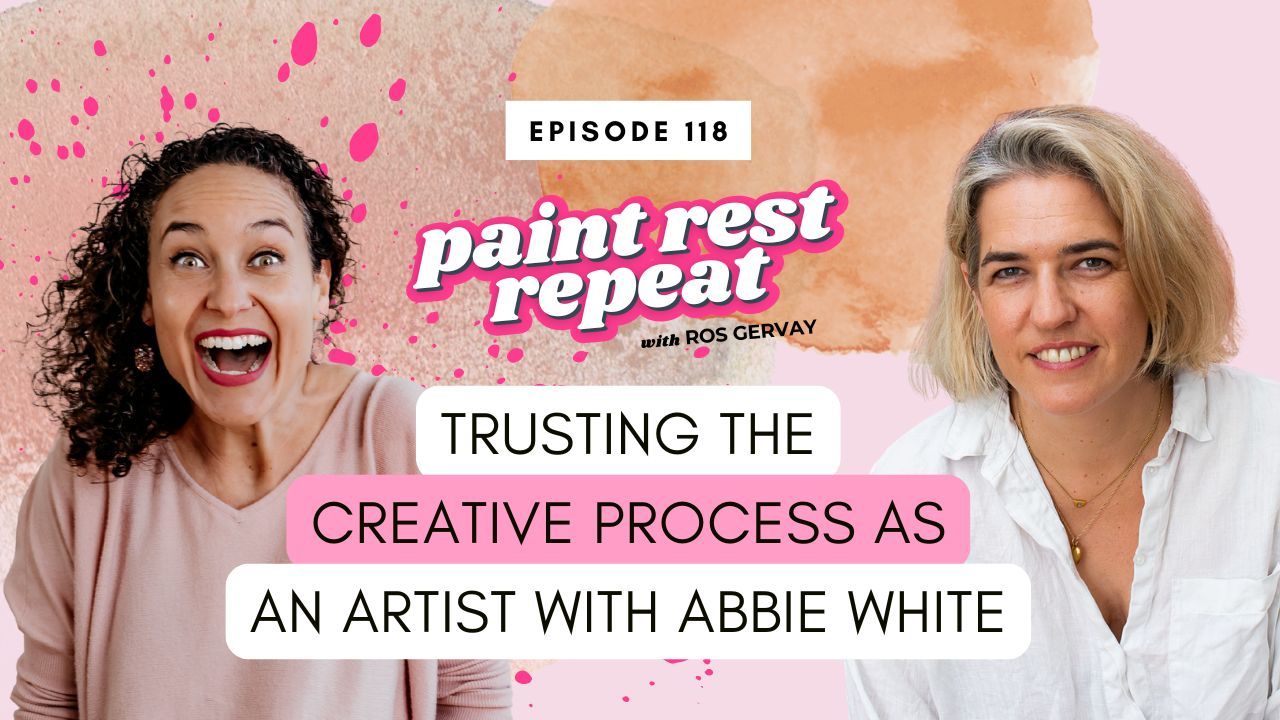
Episode 118 | Paint Rest Repeat Podcast for Artists
In a Nutshell Trusting the creative process as an artist sounds lovely in theory, but it can feel incredibly hard in practice. Especially when the painting isn’t working. When you’re comparing yourself to other artists. When you’re getting rejected from prizes. When life feels heavy. When your work is changing and you’re not sure where it’s going yet.
But often, the most important growth in your art practice happens in the messy middle — through play, experimentation, mistakes, repetition, emotional honesty, and simply continuing to make the work.
In this post, inspired by my conversation with abstract painter Abbie White, we’re exploring what it really means to trust the creative process as an artist — and why the learning is often in the making.
Here for the links referenced in the episode?
Abbie on Instagram: https://www.instagram.com/abbie_white_art
Abbie's Website: https://abbiewhiteart.com
Gather Artist Community: https://www.permissiontopaint.co/gather
Episode 118: Listen using the player below, or click on your favourite listening platform to subscribe and listen there:



What Does It Mean to Trust the Creative Process?
Trusting the creative process doesn’t mean every artwork will work out. It doesn’t mean you’ll always feel inspired. It doesn’t mean you’ll know exactly where your style is heading, or that every opportunity will lead to a yes.
Trusting the creative process means continuing to show up even when you don’t have all the answers yet. It means allowing your work to evolve. It means giving yourself permission to experiment, make imperfect work, follow accidents, change direction, and learn through doing.
So many artists want certainty before they begin. They want to know:
- Will this piece be good?
- Will this collection sell?
- Will this style be recognisable?
- Will this opportunity be worth it?
- Will people understand what I’m trying to say?
But art rarely offers certainty upfront. More often, clarity comes after you begin. The process teaches you things that thinking, planning and researching simply can’t.
The Learning Is in the Making
One of the most powerful reminders from Abbie White’s episode is that there is real learning in the doing. Not just in watching tutorials. Not just in scrolling Instagram. Not just in studying what other artists are making. Not just in waiting until you feel ready.
Actual learning happens when you are in the studio, making decisions, responding to the work, trying something, adjusting, and trying again. This is where your artistic voice starts to emerge. Not because you sat down and perfectly defined it in advance, but because you kept making. You noticed what you returned to. You noticed what felt true. You noticed what didn’t feel like you. You noticed which colours, marks, materials and ideas kept calling you back. That repetition matters.
The work that doesn’t quite land is not wasted. It is part of the process. The piece you painted over still taught you something. The experiment that failed still gave you information. The artwork that didn’t become something sellable may still have led you towards the next stronger piece. As artists, we often want to skip over the awkward, unresolved, uncertain part. But that is often where the learning lives.
Why Artists Need Room to Make Imperfect Work
If every artwork has to be “good”, your creative practice becomes very small. You start repeating what feels safe. You avoid risks. You stop experimenting. You make decisions based on what you think other people will approve of, rather than what the work is asking for.
But artists need room to make imperfect work. Not because the goal is to make bad art, but because the freedom to make unresolved, experimental, unexpected work is what allows your practice to grow. Some pieces are stepping stones. Some are studies. Some are private conversations between you and the canvas. Some are there to help you understand what you don’t want to do next.
This is especially important if you are trying to find your voice as an artist. A recognisable voice does not usually appear fully formed. It develops over time through practice, repetition, play, frustration, intuition and lived experience. You cannot rush it. You have to let the work lead you.
Stop Looking Outward for All the Answers
Comparison is one of the biggest blocks to trusting the creative process. It is so easy to look outward and start measuring your work against everyone else’s. Another artist has a clearer style. Another artist is selling more. Another artist is being accepted into prizes. Another artist seems more confident, more consistent, more polished, more successful. Of course, there is value in learning from others. We can be inspired by other artists, galleries, mentors and communities. But there is a difference between being inspired and outsourcing your creative direction.
At some point, you have to come back to yourself. Your stories. Your materials. Your instincts. Your memories. Your emotional world. Your way of seeing.
In the episode, Abbie speaks beautifully about the importance of looking inward rather than constantly looking outward. That advice is simple, but it is also incredibly grounding. Because your strongest work probably won’t come from trying to keep up with everyone else. It will come from paying attention to what is already alive in you.
Your Life Is Part of Your Creative Process
One of the reasons Abbie’s work feels so connected is that it is not separate from her life. Her paintings are shaped by process, memory, family, grief, motherhood, resilience and the need to slow down. She paints on raw canvas with acrylics in soft, flowing layers, creating a dreamy, watercolour-like effect that invites calm and reflection. But the deeper resonance comes from what sits underneath the work.
The experiences we live through inevitably shape what we make. Sometimes that influence is obvious. Sometimes it is subtle. Sometimes you only understand it much later. A colour keeps appearing. A certain kind of mark repeats. A landscape, shape or atmosphere starts to show up again and again. A feeling you couldn’t explain begins to make its way onto the canvas. This doesn’t mean every artwork needs to be autobiographical. It simply means your life comes with you into the studio. Your art practice is not happening in isolation from your grief, joy, relationships, challenges, memories or hopes. Those things become part of the work — whether consciously or quietly. Trusting the creative process also means trusting that your lived experience has something to offer your art.
Letting Go of Control in the Studio
Abbie’s raw canvas process involves a certain amount of surrender. The paint moves. The water shifts. The pigment responds to the surface. Not everything can be controlled. This is such a powerful metaphor for art-making in general. Of course, skill matters. Technique matters. Experience matters. But if you try to control every part of the process, you can sometimes squeeze the life out of the work. There is a beautiful tension in art between intention and surrender. You bring your knowledge, eye, hand and decisions. But you also leave room for surprise. A mark you didn’t plan. A colour interaction you didn’t expect. A mistake that becomes the most interesting part of the painting. A detour that takes the work somewhere better than your original idea.
Trusting the creative process means being willing to respond to what is happening, rather than forcing the work to obey the plan you started with. Sometimes the painting knows something before you do.
Rejection Is Information, Not a Verdict
Another important part of trusting the creative process is learning how to handle rejection. Every artist who puts their work into the world will experience it. You might not get into the prize. The gallery might say no. The piece might not sell. The opportunity might go to someone else. That can hurt, especially when the work feels personal. But rejection is not always a verdict on the quality or value of your art. Sometimes it simply means the work wasn’t the right fit for that particular opportunity, judge, gallery, buyer or moment. This is where trust becomes important. If every no makes you question your entire creative path, it becomes very hard to keep going. But if you can see rejection as information, you can stay more grounded.
You can ask:
- Was this opportunity aligned with my work?
- Did I research the gallery, prize or audience properly?
- Is there anything useful I can learn here?
- Do I need to improve something practical, like presentation, photography or framing?
- Or is this simply not the right fit?
Not every rejection requires a dramatic reinvention. Sometimes the most powerful thing you can do is keep making the work.
Collector Connection Often Comes From the Story Behind the Work
When artists think about selling art, they often focus on the finished piece. The colours. The size. The price. The style. The room it might go in. All of that matters.
But collectors often connect with more than the visual surface of a piece. They connect with the story. The feeling. The memory it evokes. The emotional world behind it. The way it reflects something they have experienced too.
In Abbie’s experience at art fairs, some of the most meaningful moments came through conversations with people who saw something deeply personal in her work. This is a beautiful reminder that your process is not irrelevant to your audience. The meaning behind the work can help people connect more deeply. That does not mean you need to explain every detail or over-share. But it does mean that the emotional honesty you bring to your practice can become part of what makes the work resonate. People are not just buying paint on canvas. They are often responding to something they feel.
How to Practise Trusting the Creative Process
Trusting the creative process is not just a mindset. It is something you build through repeated action. Here are a few gentle ways to practise it.
1. Make work without needing every piece to become a product
Not everything has to be sellable. Let some work be experimental. Let some be private. Let some simply teach you something.
2. Follow what keeps returning
Notice the colours, marks, subjects, materials or feelings that keep appearing in your work. Your creative voice may already be leaving clues.
3. Let mistakes become part of the conversation
Before deciding a piece is ruined, ask what it might be asking for next. Sometimes the unexpected mark is the doorway.
4. Reduce comparison
Spend less time studying what everyone else is doing and more time listening to your own work. Inspiration is useful. Constant comparison is not.
5. Keep showing up through uncertain seasons
Your art practice may shift when life is heavy. That doesn’t mean you’re doing it wrong. Sometimes your work changes because you are changing.
6. Treat rejection as information
A no does not mean you should stop. It may simply help you better understand where your work fits.
7. Give your voice time
You do not need to rush into a perfectly defined style. Let your voice develop through practice, play and repetition.
Final Thoughts
Trusting the creative process as an artist is not always easy. It asks you to keep going when the work feels uncertain. It asks you to make things before you know exactly where they are heading. It asks you to stop outsourcing your direction to comparison, trends or other people’s opinions. And it asks you to believe that your own life, instincts and experiences are worthy material for your art.
My conversation with Abbie White is such a beautiful reminder that the learning is often in the making. Not in having it all figured out. Not in avoiding mistakes. Not in rushing towards a polished outcome. But in showing up, playing, responding, experimenting, adapting and allowing the work to become more and more your own. Because sometimes the next step in your art practice isn’t to look further outward. It’s to look inward — and trust what you find there.
If you’re ready for more personalised support in building your art business, there are plenty of ways we can work together — from self-paced courses and practical resources to memberships and masterminds. Reach out here.
Ros x
Ros Gervay is an Australian artist and creative business coach who helps artists build sustainable, income-generating art businesses without burnout or compromise. She is the founder of Art for the Heart (AFH) — an online membership community for artists at all stages — and the creator of the Thrive Mastermind, a professionalisation container for artists ready to grow beyond the learning stage. Ros hosts the Paint Rest Repeat podcast, where she shares honest conversations about the art life, creative business, and what it really takes to get paid to do what you love. Based in Australia and working with artists worldwide. Learn more at permissiontopaint.co
Frequently Asked Questions
What does it mean to trust the creative process as an artist? Trusting the creative process means continuing to make work even when you don’t have all the answers yet. It means allowing space for experimentation, mistakes, growth, repetition and unexpected changes in your art practice.
How do artists learn through practice? Artists learn through practice by making decisions in the studio, noticing what works, responding to mistakes, experimenting with materials and repeating what feels meaningful. Some lessons only appear through doing the work.
Why is play important in an art practice? Play allows artists to experiment without needing every outcome to be polished or sellable. It helps artists discover new techniques, ideas and directions while reducing pressure and perfectionism.
How can artists stop comparing themselves to others? Artists can reduce comparison by spending less time looking outward for validation and more time developing their own work, stories, materials and instincts. Learning from others is valuable, but your creative direction needs to come from your own practice.
How do you find your creative voice as an artist? Your creative voice develops through time, repetition, experimentation and self-trust. Rather than forcing a style, pay attention to what you naturally return to in your work and allow those patterns to evolve.
Is rejection part of being an artist? Yes. Rejection is a normal part of putting your work into the world. It does not always mean the work is not good enough. Sometimes it simply means the artwork was not the right fit for a particular prize, gallery, judge or opportunity.
Can life experiences influence an artist’s work? Absolutely. Life experiences often shape an artist’s process, colour choices, themes, emotional tone and subject matter. Even when the work is abstract, personal experiences can still influence what appears in the studio.