How to Build an Art Career Your Own Way
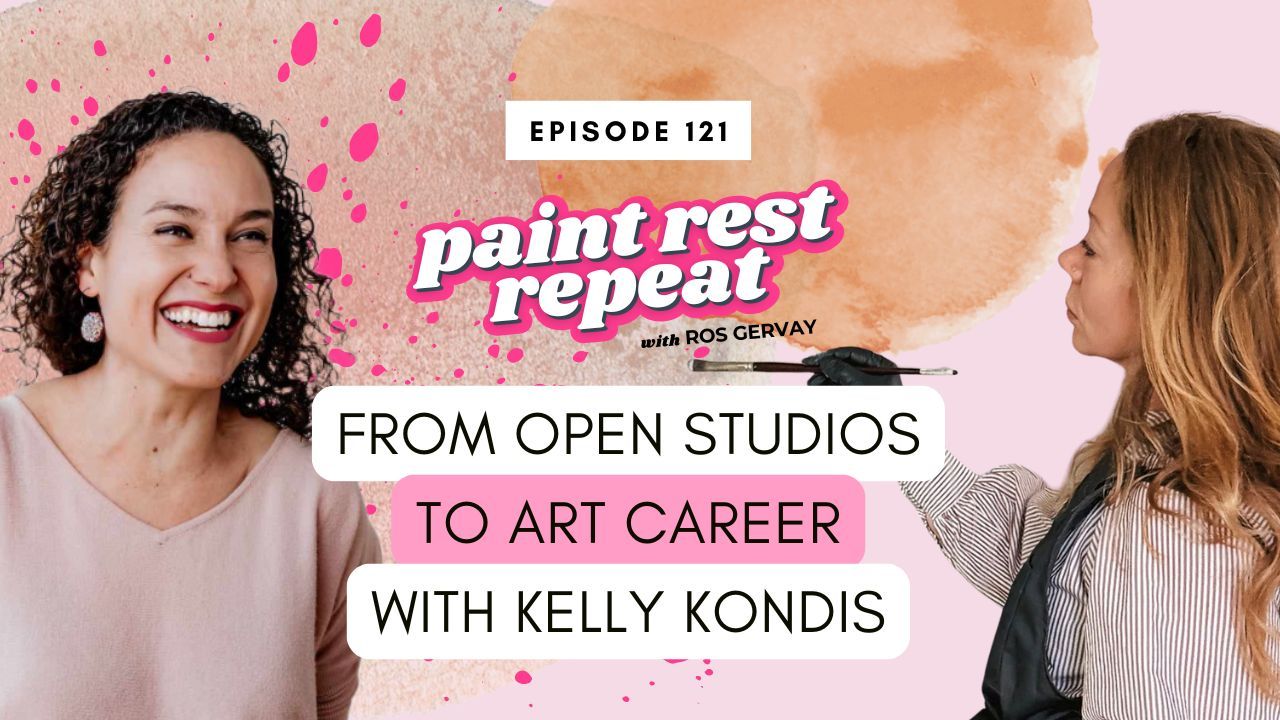
Episode 121 | Paint Rest Repeat Podcast for Artists
In a Nutshell: There is no single “right” way to build an art career.
Some artists grow through galleries. Some through Instagram. Some through art prizes, open studios, online platforms, art fairs, commissions, teaching, licensing, or a combination of several pathways.
In this episode of Paint Rest Repeat, I’m joined by atmospheric landscape painter Kelly Kondis for a conversation about what it really looks like to take your art more seriously — not by forcing yourself into someone else’s version of success, but by finding the pathway that suits your life, your work, your personality and your season.
Kelly’s story is a beautiful example of how an art career can grow gradually: through practice, courage, visibility, deadlines, community, and small moments of validation that help you keep going.
If you’ve been wondering how to move from hobby into sales, how to share your work more confidently, or whether your art career needs to follow a traditional path, this post is for you.
Here for the links referenced in the episode?
Kelly on Instagram: https://www.instagram.com/kellykondis.art
Join us inside Art for the Heart: https://www.permissiontopaint.co/afh
Episode 121: Listen using the player below, or click on your favourite listening platform to subscribe and listen there:



Building an Art Career Doesn’t Have to Look One Way
When artists think about “building an art career”, it’s easy to imagine one particular path.
You make the work. You get into galleries. You have solo shows. You sell out. You become full-time. Everything gets easier.
But for most artists, the reality is much more layered than that.
An art career might include gallery representation, but it might not. It might include direct sales, online platforms, art fairs, open studios, teaching, commissions, markets, workshops, licensing, mentoring, or a part-time job that helps create financial stability while the art business grows.
And none of those options make you less serious.
In fact, one of the most sustainable things an artist can do is stop looking for the “proper” path and start asking:
What pathway actually suits me?
That is one of the central themes in my conversation with Kelly Kondis.
Kelly has built momentum through a combination of painting consistently, sharing her work, participating in Open Studios, entering art prizes, working with galleries, showing at fairs, and staying connected with collectors. Her path has not been one single, neat ladder.
It has been more organic than that. And for many artists, that’s exactly what building a career looks like.
The Shift from Hobby to Serious Art Practice
One of the biggest questions artists ask is: “When do I get to call myself a real artist?”
Often, artists wait for an external milestone before they give themselves permission to take their work seriously.
A gallery has to say yes. A collector has to buy. A prize has to accept the work. A certain income goal has to be reached. Someone else has to validate it first.
But the shift from hobby to serious practice usually begins much earlier.
It begins when you start showing up consistently.
It begins when you make space for the work.
It begins when you treat your art as something worthy of time, attention, energy and care — even before the outside world has fully caught up.
Of course, external validation can help. A sale, an exhibition acceptance, a kind message, or an invitation can give you a powerful boost of confidence. But the foundation is built through your relationship with the work itself.
For Kelly, painting had been present for decades before it became a more public-facing career. The work was already there. The practice was already there. What changed was the level of visibility, consistency and willingness to step into the next stage.
That’s often how it happens.
Not overnight.
Not in one dramatic leap.
But through a series of small decisions that say: I’m going to take this seriously now.
Why Open Studios Can Be So Powerful for Artists
Open Studios can be a beautiful bridge between private practice and public visibility.
For many artists, the studio is a deeply personal space. It’s where the messy middle happens. It’s where paintings are unresolved, ideas are still forming, and the artist is in process.
Inviting people into that space can feel vulnerable.
But it can also be incredibly affirming.
Unlike a gallery setting, Open Studios allow people to connect with the artist, the environment, the materials, the process and the story behind the work. Collectors and visitors get to experience more than a finished artwork on a wall. They get to see the world the work comes from.
That kind of connection matters.
For artists who are building confidence, Open Studios can also provide a real-life reminder that people do respond to the work. They do feel something. They are interested. They do want to understand the person behind the paintings.
And sometimes, that experience can become a turning point.
Not because it magically creates a career overnight, but because it helps the artist believe that the work can exist beyond the private studio.
That belief is powerful.
Art Prizes, Deadlines and Building Momentum
Art prizes can be incredibly useful for artists — but not only because of the possibility of winning.
In fact, if the only reason you enter an art prize is to win, the process can become emotionally exhausting very quickly.
The real value of art prizes is often much broader.
They give you a deadline.
They ask you to finish something.
They encourage you to make decisions.
They place your work in front of judges, curators, gallerists, peers and audiences.
They help you practise putting your work forward.
They also help you build resilience.
Because the truth is, you will not get selected for everything. No artist does.
And not being selected does not automatically mean the work is weak.
It might mean the work wasn’t the right fit for that particular prize. It might mean the judges were looking for something else. It might mean there were several works with a similar feeling or subject. It might mean the final selection needed balance across mediums, scale, tone or theme.
There are many reasons a work may not be chosen.
When artists understand this, prizes can become less about personal approval and more about professional practice.
You make the work. You submit the work. You learn from the process. You keep going.
That rhythm builds momentum.
The Importance of Finding Your Artistic Voice
One of the strongest foundations of a sustainable art career is recognisability.
That doesn’t mean every painting has to look exactly the same. It doesn’t mean you can never explore, evolve or experiment.
But over time, collectors and galleries need to understand what makes your work yours.
Your artistic voice might come through your palette, subject matter, materials, mark-making, atmosphere, emotional tone, scale, composition or the way you see the world.
For Kelly, atmosphere is central.
Her paintings are not simply about specific locations. They are about mist, cloud, light, landscape, memory and feeling. They capture the sensation of being somewhere, rather than documenting an exact place.
That is part of what makes the work recognisable.
For your own practice, it can be helpful to ask:
What keeps appearing in my work?
What am I repeatedly drawn to?
What do people often respond to?
What feeling am I trying to create?
What do I want my work to be known for?
Your artistic voice is not something you usually invent in one sitting.
It emerges through practice. Through repetition. Through paying attention. Through allowing yourself to follow the threads that keep calling you back.
Selling Art in a Way That Suits You
Not every artist wants to sell in the same way.
Some artists love direct sales. They enjoy building relationships with collectors, sharing on Instagram, writing emails, managing their website and having personal conversations about the work.
Other artists find that exhausting and would rather work through galleries or curated platforms.
Some artists thrive at art fairs and in-person events. Others prefer a quieter online model.
Some artists want to build towards solo exhibitions. Others want regular small releases, commissions, teaching income or a hybrid approach.
There is no moral hierarchy here.
The best sales pathway is the one that works for your art, your energy, your communication style, your capacity and your goals.
If you are trying to build an art business, it’s worth asking:
Where do I feel most comfortable selling?
Where are my collectors most likely to find me?
Do I want direct relationships with buyers?
Do I want gallery support?
Do I enjoy in-person events?
Do I need a simpler online system?
What kind of selling rhythm feels sustainable?
Artists often get stuck because they think they have to follow a pathway that doesn’t suit them.
But an art career is not only built through visibility.
It is built through sustainable visibility.
That distinction matters.
Why Multiple Income Streams Can Support Your Art Practice
There is a lot of pressure in the art world around becoming a “full-time artist”.
For some people, that is the dream. For others, it may not be the most supportive or sustainable goal — at least not right away.
Having another income stream can be incredibly helpful.
It can reduce pressure on your creative work. It can allow you to make better decisions. It can help you avoid creating from a place of panic. It can give you the space to say no to opportunities that aren’t aligned.
A second income stream does not mean you are less committed.
It can actually be one of the things that protects your commitment.
Many artists build strong careers while also working part-time, teaching, running another business, freelancing, parenting, caring for family members, or managing other responsibilities.
The question is not: “Am I a real artist if I have another income stream?”
The better question is: “What structure allows me to keep making my work with the most stability, integrity and energy?”
That answer will look different for everyone.
Share the Work — and Let People See the Person Behind It
One of the most vulnerable parts of building an art career is being seen.
Not just having the artwork seen.
Having you seen.
Many artists are comfortable letting the paintings speak for themselves, but feel uneasy sharing their story, process, face, studio, voice or personal reflections.
You don’t have to overshare to build connection.
But people often connect more deeply with artwork when they understand something about the person behind it.
- They want to know what inspires you.
- They want to see where the work is made.
- They want to understand your process.
- They want to feel the energy behind the paintings.
- They want to know why the work matters to you.
This does not mean turning your art practice into a performance.
It simply means allowing people a way in.
For collectors, that connection can add another layer of meaning to the work. For the artist, it can build trust, recognition and relationship over time.
A sustainable art career is rarely built on artwork alone.
It is also built on connection.
A Gentle Reminder if You’re Taking Your Art More Seriously
If you are in the season of wanting to take your art more seriously, remember this:
- You do not need to have the whole path mapped out.
- You do not need to be ready for every opportunity before you begin.
- You do not need to sell the same way someone else sells.
- You do not need to become a full-time artist overnight.
- You do not need to wait until you feel completely confident.
- You can start where you are.
Apply for the thing. Share the painting. Enter the prize. Open the studio. Send the email. Build the website. Reach out to the gallery. Talk to the collector. Make the next body of work.
Confidence often comes after the action, not before it.
And your art career can be built in a way that actually belongs to you.
Key Takeaways
There is no single correct pathway to building an art career.
Open Studios can help artists build confidence, visibility and connection.
Art prizes are useful for deadlines, momentum, exposure and resilience — not just winning.
Your artistic voice develops through practice, repetition and paying attention to what keeps calling you back.
Selling art should happen through pathways that suit your personality, work and capacity.
Multiple income streams can support a more sustainable and less pressured art practice.
Collectors often connect not only with the artwork, but with the artist behind it.
Taking your art seriously often begins before you feel fully ready.
If you’re ready for more personalised support in building your art business, there are plenty of ways we can work together — from self-paced courses and practical resources to memberships and masterminds. Reach out here.
Ros x
Ros Gervay is an Australian artist and creative business coach who helps artists build sustainable, income-generating art businesses without burnout or compromise. She is the founder of Art for the Heart (AFH) — an online membership community for artists at all stages — and the creator of the Thrive Mastermind, a professionalisation container for artists ready to grow beyond the learning stage. Ros hosts the Paint Rest Repeat podcast, where she shares honest conversations about the art life, creative business, and what it really takes to get paid to do what you love. Based in Australia and working with artists worldwide. Learn more at permissiontopaint.co
Frequently Asked Questions
How do I start building an art career? Start by making work consistently and sharing it in a way that feels manageable. From there, you might apply for Open Studios, enter art prizes, create a website, grow an email list, sell through Instagram, approach galleries, use online platforms, or participate in art fairs. The best first step is one that helps you become more visible without overwhelming your capacity.
Do I need gallery representation to have an art career? No. Gallery representation can be valuable, but it is not the only way to build an art career. Many artists sell directly, use online platforms, participate in fairs, teach, licence their work, take commissions, or use a hybrid model. A sustainable career can be built through many different pathways.
Are art prizes worth entering? Art prizes can be worth entering because they create deadlines, visibility and professional momentum. They also help artists practise putting their work forward. Not being selected does not necessarily mean the work is not strong — it may simply not have been the right fit for that particular opportunity.
What is the best way to sell art? The best way to sell art depends on the artist. Some artists enjoy direct sales through Instagram, email and their website. Others prefer galleries, online platforms or art fairs. The most sustainable approach is usually the one that suits your work, personality, audience, capacity and long-term goals.
Can I be a serious artist if I have another job? Yes. Many serious artists have additional income streams. Another job, business or side income can provide stability and reduce pressure on your creative practice. It can support your art career rather than take away from it.
How do I find my artistic voice? Your artistic voice develops through consistent practice, experimentation and reflection. Pay attention to what themes, colours, materials, subjects, moods or ideas keep appearing in your work. Over time, your voice becomes clearer through repetition, refinement and trust in what genuinely interests you.
How can artists build confidence? Confidence often comes through action. Sharing your work, entering prizes, applying for opportunities, opening your studio, talking to collectors and receiving feedback can all help. Confidence is not something you need to wait for before you begin — it is often built by beginning.