How to Stay Connected to Your Art When It Starts to Sell
Episode 117 | Paint Rest Repeat Podcast for Artists
In a Nutshell What happens when your art begins as a private place to breathe, but slowly becomes something other people want to buy, collect, and display?
For many artists, this shift can feel exciting and unsettling at the same time. Selling your art can be deeply affirming, but it can also bring pressure, self-doubt, comparison, and the quiet fear that your creative practice might stop feeling like your own.
In this post, inspired by my conversation with intuitive artist Jac P on the Paint Rest Repeat podcast, we’ll explore how to stay connected to the reason you create as your art begins to grow, sell, and reach more people.
Here for the links referenced in the episode?
Connect with Jac P on Instagram 👉 https://www.instagram.com/jac_puntoriero
Leave a question for the podcast 👉 https://www.permissiontopaint.co/podcast
Join the Permission to Paint Free Community over on Facebook community 👉 https://www.facebook.com/groups/permissiontopaintfreecommunity
Episode 117: Listen using the player below, or click on your favourite listening platform to subscribe and listen there:


When Art Begins as a Place to Breathe
Many artists don’t begin creating with a business plan. They begin because art gives them somewhere to land. A place to process. A place to feel. A place to reconnect with themselves. A place to breathe.
For intuitive artist Jac P, returning to art as an adult wasn’t about building a perfect strategy from day one. It began with curiosity, wellbeing, courage, and following the next step. That’s true for so many artists. You might start painting because it helps you feel calmer. You might begin creating again after years away because something inside you is asking for more space. You might make work simply because the process feels grounding, playful, or honest. And that matters.
Even before anyone buys it. Even before anyone sees it. Even before you know where it’s going. Your art does not need to be commercially successful before it is valid.
The Shift From Process to Product
At some point, though, things can start to change. Someone asks if a painting is for sale. A friend wants to commission you. A gallery shows interest. A collector buys a piece. People begin responding to the work in ways you didn’t expect. Suddenly, your art is not only something you make. It becomes something other people want to own, display, collect, and talk about. This can be beautiful. It can also feel surprisingly vulnerable.
When your art becomes a product, even in the most meaningful sense, new questions can appear: Will this sell? Should I make more work like the piece that sold? What if people don’t respond to this new direction? Am I making this because I want to, or because I think it will perform well? Have I lost the reason I started? These questions are not a sign that you’re doing something wrong. They are part of the natural tension that can arise when a personal creative practice begins to grow into a more public-facing art career.
Why Selling Art Can Bring Up Self-Doubt
A lot of artists assume that selling their work will make them feel more confident. And sometimes, it does. A sale can feel validating. It can remind you that your work connects with people. It can give you evidence that your art has a place in the world.
But selling art can also bring up new layers of self-doubt. Once people are paying attention, you might feel more aware of your choices. You might compare your work to other artists. You might second-guess your pricing, your style, your subject matter, or the direction your work is taking. You might wonder whether your art needs to become more strategic, more polished, more sellable, or more serious.
This is where many artists begin to drift away from the process that made the work powerful in the first place. Not because they stop caring. But because the outside noise gets louder.
How to Keep the Process Alive
Staying connected to your art as it starts to sell does not mean ignoring the business side. It does not mean refusing growth, avoiding commissions, or pretending sales don’t matter. It means making sure the product does not completely overtake the process.
Here are a few ways to protect that connection.
- Keep Making Work That Is Not for Sale
Not every piece needs to have a job. Some work can be exploratory. Some work can be messy. Some work can be private. Some work can simply be part of your development. When every painting has to be sellable, your nervous system can start to tighten around the work. Give yourself permission to make art that is allowed to teach you something, even if it never leaves the studio.
- Notice When You Are Creating for Approval
There is nothing wrong with considering your audience. But there is a difference between connection and approval-seeking. Connection asks: How can I share this honestly? Approval-seeking asks: What will make people like me? That difference matters. When you notice yourself making choices only because you think they will be more popular, pause. Come back to the work. Come back to the feeling. Come back to the question: what am I actually curious about here?
- Let Your Art Grow Without Forcing It to Become a Brand Too Soon
Many artists feel pressure to define their style, niche, message, palette, and positioning before the work has had time to breathe. Clarity is helpful. But premature clarity can become a cage. Your art practice needs room to evolve. Especially if you work intuitively, your creative voice may reveal itself through the act of making, not before it. You are allowed to grow into the work. You are allowed to follow the next step.
- Stay Close to Your Original Reason
Why did you begin? Was it peace? Expression? Healing? Curiosity? Play? A need to feel more like yourself? Your answer might change over time, but it is worth returning to often. As your art grows, your original reason can become an anchor. It can help you make decisions about commissions, exhibitions, pricing, visibility, and opportunities without losing yourself in the process.
You Don’t Have to Choose Between Meaning and Growth
One of the biggest myths artists carry is that they have to choose between making meaningful work and building a sustainable art career. But you do not have to abandon the soul of your practice in order to grow. Your art can be personal and professional. It can be intuitive and collected. It can begin as a place to breathe and still become something that belongs in someone else’s home. The goal is not to keep your art small so it stays pure. The goal is to grow in a way that still feels aligned.
A Conversation with Jac P
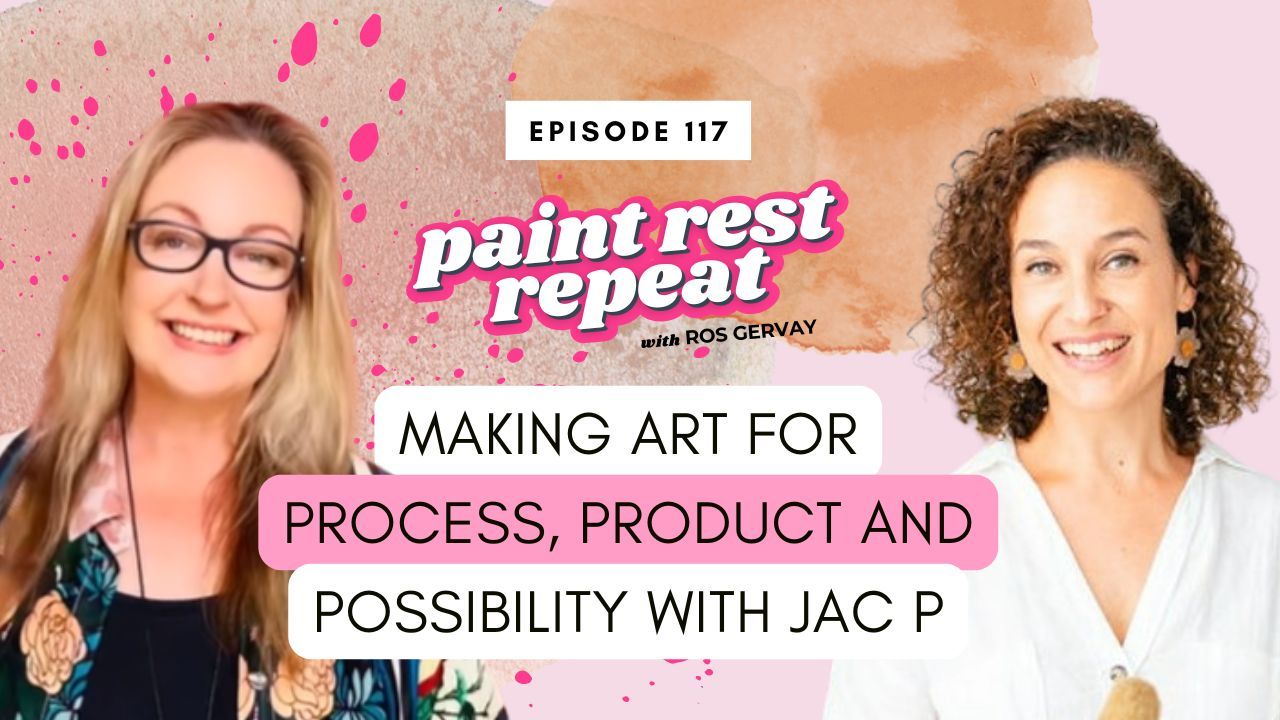
This topic is at the heart of Episode 117 of the Paint Rest Repeat podcast, where I’m joined by intuitive artist Jac P. Jac is based in Leighton, in the Riverina region of New South Wales, and creates original one-of-a-kind works using acrylic paint and charcoal line on canvas. Her work is layered, expressive, and deeply connected to feeling, courage, nature, colour, life, family, and community.
Jac has been shortlisted for and won many art prizes, including being a two-time winner of the Penny Paniz Art Prize for abstract work. She has also been featured in Art Edit and Interior Design, exhibited in group shows, and her paintings now hang in collections nationally and internationally.
In our conversation, Jac shares how she returned to art as an adult through curiosity, wellbeing, and courage, without a big polished plan. We talk about making art for the process versus making art for the product, as well as self-doubt, comparison, commissions, galleries, community, and staying connected to the reason you create in the first place.
Final Thoughts
If your art is beginning to sell, or if you are starting to imagine that it could, you might feel both excited and exposed. That is normal. Growth often asks you to hold more than one truth at once.
You can want your art to sell and still want it to feel personal. You can care about strategy and still protect your intuition. You can build a career and still make work that helps you breathe. Your art does not need to become more serious before you are allowed to claim it. And it does not need to stop feeling like yours in order to reach someone else.
If you’re ready for more personalised support in building your art business, there are plenty of ways we can work together — from self-paced courses and practical resources to memberships and masterminds. Reach out here.
Ros x
Ros Gervay is an Australian artist and creative business coach who helps artists build sustainable, income-generating art businesses without burnout or compromise. She is the founder of Art for the Heart (AFH) — an online membership community for artists at all stages — and the creator of the Thrive Mastermind, a professionalisation container for artists ready to grow beyond the learning stage. Ros hosts the Paint Rest Repeat podcast, where she shares honest conversations about the art life, creative business, and what it really takes to get paid to do what you love. Based in Australia and working with artists worldwide. Learn more at permissiontopaint.co
Frequently Asked Questions
How do I start selling my art without losing my creativity? Start by protecting space for process-based work. Not every piece needs to be made for sale. Keep experimenting, stay connected to your original reason for creating, and build the business side slowly around the practice rather than replacing the practice with pressure.
Why does selling my art make me feel more self-conscious? Selling your art can make the work feel more visible and exposed. Once people are buying, collecting, or commenting on your work, it is natural to become more aware of how it is received. This does not mean you are not ready. It simply means you are navigating a new level of visibility.
Should I make art that sells or art that feels meaningful? Ideally, your practice can hold both. Commercial awareness can be helpful, but if every decision is driven by what might sell, the work can begin to feel disconnected. The aim is to build an art practice where meaning and growth can coexist.
How do I know if I’m making art for approval? You might notice yourself choosing colours, subjects, sizes, or styles only because you think they will perform well, even when they no longer feel connected to you. A helpful question is: “Would I still want to explore this if no one saw it yet?”
Can intuitive art become a serious art career? Yes. Intuitive art can absolutely form the foundation of a serious and sustainable art career. The key is learning how to honour the process while developing the structures, confidence, and visibility needed to share and sell the work.