Episode #40 The 5 Steps to Turn Your Hobby Into An Art Business
Episode 40 | Paint Rest Repeat Podcast for Artists
In a Nutshell: Turning your art hobby into a business doesn't happen in one leap. It happens in steps. In this episode, my then co-host Laura Jane Day and I share the five-step framework we've both used to build creative lives as working artists: develop your art and your artist identity, share your work, choose your business strategy, set meaningful goals, and surround yourself with mentors and community. We also talk about why following your creative calling matters, not just for you, but for everyone watching you do it.
If you've been quietly wondering whether you could ever sell your art, or you're ready to take it more seriously, start here.
Here for the links referenced in the episode?
Laura's free resources, including her art business goal setting guide: laurajaneday.com/free
Laura on Instagram: @laurajaneday
Join the Art for the Heart waitlist: https://www.permissiontopaint.co/afh
Episode 40: Listen using the player below, or click on your favourite listening platform to subscribe and listen there.



Why it matters to follow the calling
Before we get into the steps, I asked Laura a big question. If you have a dream of selling your work, why is it so important to actually follow it?
Her answer made me teary. If you have a calling of the heart, Laura believes it's your duty to honour it. That goes deeper than money. It's about stepping into the life you want to live, and designing a creative life on your own terms.
It's also about role modelling. There's so much in the collective consciousness about how hard it is to make money from art. Every artist who builds a fulfilling, creative and financially rewarding life shows others, including our kids, that it's possible.
That's exactly why we do this podcast. If you want more than a job that drains you, or a life spent in service to everyone else, and building an art business is how you want to get there, we're here to help.
The 5 steps to turn your art hobby into a business
This framework comes from reflecting on the steps and strategies that helped each of us create a creative life as working artists. It's relevant whether you're a hobby artist hoping to make your first sale, you've made a few sales and want more, or you're already selling and want to grow.
We later went deeper into each step in its own episode, so you'll find those linked below too.
Step 1: Your art and your artist identity
The first step is your art practice itself. That means creating a volume of work, refining your technique and developing your style.
Making lots of work lets you immerse yourself in your technique, learn, grow and challenge yourself. And if you want to sell, whether that's independently, through a gallery or through commissions, people need to recognise a common thread in your work.
A style doesn't have to box you in
Many artists push back on the idea of a style. "I don't want to be caged. I want to be free."
My answer is that you can have both. Your public-facing work, the work you sell, benefits from a recognisable style or common thread. Alongside that, you can have a playful, experimental practice where anything goes. You might be known for acrylics on canvas, while doodling with paint markers or exploring ethereal watercolours on the side.
Your common thread might be a subject or theme rather than a medium. Laura and I are both drawn to botanicals and nature, for example. Laura also has a second thread of more abstract mark-making work, and you can see the link between them.
And if your style genuinely fascinates you, it won't bore you. It will keep inviting you to dig deeper.
Don't get stuck in the learning phase
Laura's gentle reminder: don't get lost in perfectionism, or in endless learning. You can learn forever. At some point, you need to move to the next step.
(Developing your style? You might also enjoy Why Finding Your Art Style Matters, with Willamina Russo.)
Step 2: Share your art
Wherever you are on your journey to finding your style, start sharing your work. If you stay hidden in your cocoon, you miss out on so much momentum, support and encouragement.
Sharing includes exhibiting, but the easiest place to start is social media. Take a photo of what you're working on today, and post it.
Don't get too precious about your photography. A beautiful account is lovely, but an empty account helps no one. Even now, if I'm racing out the door to ship an artwork, I'll share a quick snapshot. We're real people, and we're busy.
Setting up your accounts
- Start with Instagram and a Facebook page. You can share from Instagram to Facebook automatically, so you get double the reach without double the work.
- Personal or separate art account? If you want to keep family moments private, have a separate art account. Laura converted her personal account into her art account years ago, because art is woven through her whole life.
- Make it a public business account, so new people can find you.
Share the journey, not just the finished piece
People love watching something come from nothing. Share the blank page, the first marks, the drawing, the underpainting. Not every single session, though. Protect your sacred creative time and put the phone away when you need to.
Comparison, perfectionism and imposter syndrome often show up at this stage. If they do, you're completely normal. You don't need to be a social media superstar either. As we said in the episode, you only need around 100 people who love and buy your art to build a career.
(Go deeper with How to Share Your Art and Grow Your Reach (Step 2 of 5).)
Step 3: Choose your strategy
Strategy means understanding the kind of art business you want to build, so you have clarity on where you're going. When you know your destination, you can make the right small steps towards it.
There are lots of models to choose from:
- Fine art galleries
- Retail galleries and stores
- Self-representation, selling directly to your collectors
- A mixed model, perhaps with a part-time job or teaching helping to fund your art business
This is also where you explore which income streams you want to include. Without a strategy, you can end up floating about, flailing.
(For more on art business models, read From Starving Artist to Making an Income from Your Art, Ideas to Make More Money From Your Art and Art Business Strategy (Step 3 of 5).)
Step 4: Set your goals
You can't set meaningful goals until you know where you're going. Once your strategy is clear, goals become much easier.
One method I love, taught to me by business mentor Tash Corbin, starts with a brain dump. Write down everything you want to achieve on a big piece of paper. Then narrow it down to a small set of goals that are genuinely achievable.
Because if you try to do everything at once, you'll feel like you're failing, and that does terrible things to your motivation.
Focus on one area at a time
Laura built her business bit by bit, working part-time hours. Her secret is having a clear focus for each season. One month might be about growing your online shop. Another might be building your mailing list, planning an exhibition or starting workshops.
Let joy lead
Please don't choose an income stream just because you think you should. If running online courses doesn't light you up, don't do it. If small in-person workshops warm your heart, do those instead. We're not building another boring day job here. We're building the life you want.
And yes, you're allowed to make money from things you love. It might feel too good to be true, but it isn't.
(Go deeper with Goal Setting for Artists and Why Goal Setting Feels Scary for Artists (Step 4 of 5).)
Step 5: Find mentors and build your community
Mentors come in many forms
A mentor doesn't have to be someone you've met. It could be someone whose books, podcasts or body of work you devour. It could be someone outside the art world, or an artist who has passed away. You might also invest in a course, a personal development program, or one-on-one sessions with a business coach or creative mentor.
For me, the biggest value of a mentor is perspective. They help you step back, take the emotion out of it, and see the big picture, especially your strategy. The art business path is bumpy, particularly at the start, and mentors help you ride it.
Laura added that mentors are also living proof. If you're battling the belief that artists can't make money, surround yourself with people who are doing exactly that.
Community is non-negotiable
Julia Cameron calls them "believing mirrors": the people who believe in you, want your success and reflect the best parts of you back to you. They're the ones who encourage you through seasons of self-doubt, help you problem solve, and turn up to your events.
If you don't have that community around you yet, try:
- Local artist Facebook groups
- A membership or art society
- Council-run creative events, craft gatherings and exhibition openings
- Small business groups
- Reaching out to artists you admire on Instagram and starting a conversation
The more you put yourself out there, the easier it gets.
(Find more ideas in 12 Ways to Build Your Artist Community and Mentorship and Community for Artists (Step 5 of 5).)
It is possible
If there's one thing we want you to take from this episode, it's this: if selling your art is your calling, it is absolutely possible. You'll need a few ingredients, including your art, your voice, a strategy, goals, mentors and community. But you can do it.
And if you have a friend who makes gorgeous art but doesn't see its potential, send them this post. Be their believing mirror.
Want support with every step?
Five steps is a lot to work through on your own. That's exactly why community and mentorship are part of the framework.
Art for the Heart is my online membership community for artists at all stages. Members choose the pathway that suits them. The Growth pathway is for artists who want to grow their income and build strong business foundations. The Creative pathway is for inspiration, nourishment and consistency in your art practice.
Inside, you'll find:
- A warm community of artists and experts who've already walked this path, so you're not guessing your way through it alone
- Practical tools and resources for the things that trip artists up, like what to post and how to package and price your work
- A regular rhythm of live calls and check-ins, so your ideas actually move forward instead of sitting on your someday list
Enrolment isn't always open, so the waitlist is the best place to start. Pop your name down and you'll be the first to know when doors open again.
Join the Art for the Heart waitlist here
If you're ready for more personalised support in building your art business, there are plenty of ways we can work together, from self-paced courses and practical resources to memberships and masterminds. Reach out here.
Ros x
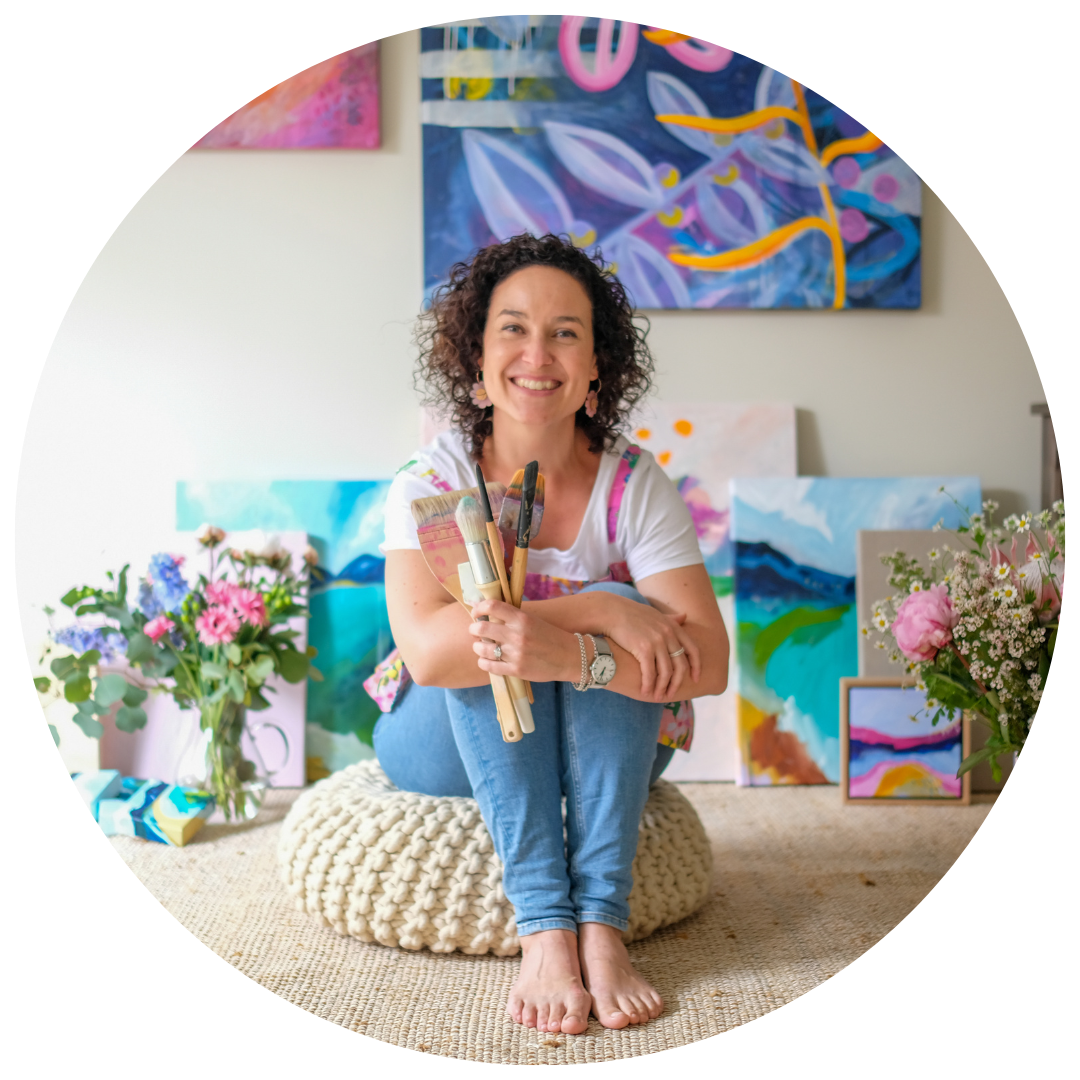
Ros Gervay is an Australian artist and creative business coach who helps artists build sustainable, income-generating art businesses without burnout or compromise. She is the founder of Art for the Heart (AFH), an online membership community for artists at all stages, and the creator of the Thrive Mastermind, a professionalisation container for artists ready to grow beyond the learning stage. Ros hosts the Paint Rest Repeat podcast, where she shares honest conversations about the art life, creative business, and what it really takes to get paid to do what you love. Based in Australia and working with artists worldwide. Learn more at permissiontopaint.co.
Frequently Asked Questions
How do I turn my art hobby into a business? Work through five steps: develop your art and your artist identity, share your work consistently, choose the business model you want, set achievable goals, and surround yourself with mentors and a supportive community.
Do I need a style to sell my art? A recognisable style, subject or common thread helps people know and remember your work. You can still keep a separate, experimental practice alongside it, so a style doesn't have to box you in.
Should I have a separate Instagram account for my art? It depends. If you want to keep family life private, create a separate art account. If art is woven through your whole life, you might convert your personal account. Either way, use a public business account so new people can find you.
What art business models are there? Common models include selling through fine art galleries, retail galleries and stores, self-representation, or a mixed model where teaching or part-time work helps fund your art business.
How do I set goals for my art business? Get clear on your strategy first. Then brain dump everything you want to achieve, and narrow it down to a few achievable goals. Focusing on one area at a time helps you build momentum.
Do artists need a mentor? A mentor can help you see the big picture and stay on track, especially early on. Mentors can be people you work with directly, or artists and authors whose work you learn from.
How do I find an artist community? Try local Facebook groups, memberships, art societies, council events, exhibition openings and small business groups, or reach out to artists you admire online.