Episode #38 Our Top Tips for Preparing for a Successful Art Show
Episode 38 | Paint Rest Repeat Podcast for Artists
In a Nutshell: A self-initiated art exhibition, solo or group, is one of the most powerful things you can do for your art practice. Sales are wonderful, but they're not the only measure of success. In this episode, my then co-host Laura Jane Day and I share what we've learnt from putting on our own shows: how to choose a venue and what to ask them, picking a theme, working backwards from opening night, hanging the work, handling sales, and marketing your show so people actually turn up. We also share why a pre-sale and a few little red dots can make all the difference.
Whether you're dreaming of your first solo show or getting back to exhibiting after a break, this is your practical starting point.
Here for the links referenced in the episode?
Laura's free resources, including her exhibition planning workbook: laurajaneday.com/free
Laura on Instagram: @laurajaneday
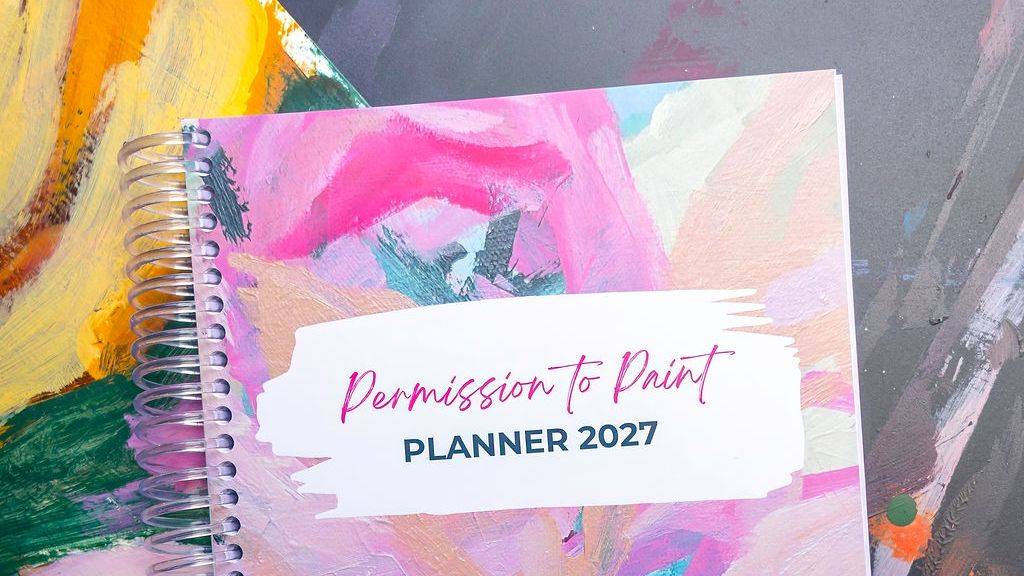
The 2027 Permission to Paint Planner: https://www.permissiontopaint.co/planner
Episode 38: Listen using the player below, or click on your favourite listening platform to subscribe and listen there.



"That's what people who don't sell their art say"
Let me tell you a story against myself.
When we recorded this episode, I'd just coordinated a group show in Sydney called Florescence with a wonderful group of artists. For the first couple of days, I had no sales. So I said to my husband, "You know what, darling? There are so many benefits to art shows. It's not all about the sales."
He looked at me and said, "That's what people who don't sell their art say."
I laughed. But I've reflected on it a lot since, and I still genuinely believe that sales aren't the main purpose of an art show. Of course you want sales. Cash helps with everything. But an exhibition also:
- Signals to the world, and to yourself, that you're serious about your art
- Gives you a reason to pull together a body of work that makes sense together
- Gives you something to work towards
- Takes you on a personal and creative development journey as you build the work
- Gives you a mountain of content to share
Sales are the icing on the cake
A sale depends entirely on people outside of you. That's why it can't be your only gauge of success. Artist mentor Willamina Russo talked about this on the podcast: the difference between external and internal measures of success. (You can read more in Why Finding Your Art Style Matters, with Willamina Russo.)
Laura's purpose for her upcoming show was a great example. Her third solo exhibition was at a local gin distillery where she was also running workshops. The venue offered local artists free wall space for six weeks, bringing new people through their doors. In return, Laura's show would promote her workshops. A mutual marketing exercise, with art sales as a bonus.
Get clear on your why before you start. It shapes every decision that follows.
Step 1: Solo or group show?
Decide first whether you're putting on a solo show or a group show with other artists.
A group show shares the workload, the costs and the audience, and it's a lovely way to start. A solo show is a bigger commitment, but every wall is yours.
A self-initiated show can be as big or as small as you like. It doesn't need to be in a fancy gallery to count.
Step 2: Choose your venue (and ask all the questions)
Laura's two solo shows had been in a hotel, which offered the space for free. Her third was in a gin distillery. My group show was in a gallery space we paid for. There are options at every budget.
Before you commit, ask the venue:
- Cost and commission. Is there a hire fee? Do they take a commission on sales?
- Hanging. Will they help hang the work, or is it all on you? (Our gallery didn't help. By Laura's second hotel show, the maintenance team hung everything.)
- Marketing. Will they promote the show? Do they have good social media and an email list?
- The opening event. Who's responsible for what? Who organises refreshments? Does the venue have a liquor licence?
- Staffing. Does the venue staff the space, or do you need to be there? For a solo show, that's a big commitment. In a group show, you can share the shifts.
- Sales. Will they process sales, or direct buyers to you?
It's also worth chatting with other artists who've exhibited in the space. They'll tell you what it's really like.
Step 3: Choose a theme
Next, decide on a theme or idea to explore that pulls the show together. A title can come later, once you've started creating. But sometimes choosing a single word early on gives you lovely direction.
Then look at what you've already got. You might be surprised how many existing pieces fit your theme. Start with those, then flesh out new ideas around them.
How many works do you need?
It depends on the venue, whether it's solo or group, and the scale of your work. If you paint large canvases, you might only need five.
My general rule is that less is better. Give each piece space, so people can actually imagine it in their own home. It's almost a sign of respect for the artwork.
Laura's approach to her first solo show was different, and that's okay. She'd had a long break from making, and the show was really about her creative development. She made lots of small works on paper. Her third show was more restrained, with a clearer direction. Your approach comes back to your why.
Step 4: Work backwards from opening night
Laura likes to give herself at least eight weeks to create new work, and more if possible. And she plans it backwards.
Start with your exhibition date, then work back:
- When does all the work need to be framed?
- When does it need to be varnished before that? (Working in acrylics, Laura likes to let paintings settle for about a week before varnishing.)
- When does it need to be photographed or scanned? Before varnishing is usually best.
- Do you want prints or cards to sell alongside the originals? When do those need to be ordered?
Then, from today, you know exactly what needs to happen when.
(I share more about working backwards from a big goal in How to Turn Your Art Dream into Reality.)
Step 5: Plan the layout and hang the work
Hanging takes much longer than you expect. Or it might not. It really depends on your nature.
When we hung Florescence, I was out there with a ruler and a spirit level, measuring everything. Meanwhile, one of the other artists, who has curatorial experience, hung a wall twice the size of mine in about half an hour. We filmed it as a time lapse. Both walls looked great. So roll how you roll.
What really helped us was planning the layout before install day. We got together on Zoom about a week beforehand, put everyone's artwork onto an image of the space, and debated where everything would go. Install day was far more efficient, and more fun.
Laura does something similar for solo shows. She visits the venue first, takes photos, and plans out combinations in advance.
Don't forget the finishing touches: wiring, place cards, your artist statement and bio, and price lists or QR codes. (Need help with your statement? See Artist Bio vs Artist Statement vs Artist CV.)
Step 6: Plan how you'll handle sales
If the venue isn't processing sales, you'll need a simple system.
At her hotel shows, the venue staff directed every buyer to Laura. She put posters on the wall with QR codes that led to her website, where every piece was available to buy. Simple, and it worked.
Run a pre-sale
This was one of Laura's most successful strategies. She opened sales at 5pm on hanging day, before the official opening.
Because her show was in Ballarat, many of her followers in Melbourne couldn't make the opening. The pre-sale gave them a chance to buy, and several pieces sold before the doors officially opened.
If you try this, give people plenty of notice. Let your email list and social media followers know exactly when the pre-sale opens, and when the show officially opens.
Celebrate every red dot
Laura filmed herself placing each little red "sold" sticker on the artwork and shared it. It's wonderful social proof.
And yes, even if the buyer is your mum or your husband. It's still a sale.
Step 7: Market your show
As my husband likes to say, marketing marketing. You can't avoid it. If you want people at your opening and buying your work, you need to get the word out.
Here are some of the ideas we've tried:
- List it in local events calendars, including your council's.
- Contact local papers and media with a short press release sharing your story. Press releases can feel intimidating, but you don't need to reach a certain level to send one. A little story in your local paper counts.
- Make a list of everyone you'd love to invite. Go through your contacts and Facebook friends, and send them a personal invitation.
- Create a digital flyer with the opening date and time, and how long the show runs.
- Set up an event. For Florescence, we used free Eventbrite tickets as RSVPs, which meant we could send reminders: "Two sleeps to go!" People are busy, and those nudges really helped. A Facebook event can work well too.
- Share the journey. Don't keep everything under lock and key until a week before. Share the creation process along the way, so people feel invested and want to come and see the finished work. Story sells.
Personally, I'd hold back on sharing the full finished artworks before the show. Sneak peeks, details and process shots build anticipation.
(For even more ideas, have a read of 10 Ways to Promote Your Art Exhibition.)
You don't have to do it all
We've covered a lot, and honestly, we could have kept going for hours. But please know you don't have to do every single thing on this list. These are simply the lessons we've learnt along the way.
Do your very best, especially with your first show. Afterwards, sit down for a little debrief. Not "what should I have done?", because that's a negative lens. Instead, ask, "What would I do differently, or better, next time?"
Because there will be a next time. By putting on a show, you've told the world, and yourself, that you're an artist and you're serious about it.
Plan your next exhibition with less stress
An exhibition has a lot of moving parts. The easiest way to stay on top of them is to put your opening date in your diary and work backwards, week by week.
The 2027 Permission to Paint Planner is designed specifically for artists, to help you do exactly that. Put dates on your big goals, like your next show, then break them into weekly focus areas and daily priorities so nothing sneaks up on you.
Inside, you'll find:
- Monthly and weekly task lists to get everything out of your head
- Weekly focus areas to keep your priorities clear
- Daily priorities, so you always know your top three
If you're ready for more personalised support in building your art business, there are plenty of ways we can work together, from self-paced courses and practical resources to memberships and masterminds. Reach out here.
Ros x
Ros Gervay is an Australian artist and creative business coach who helps artists build sustainable, income-generating art businesses without burnout or compromise. She is the founder of Art for the Heart (AFH), an online membership community for artists at all stages, and the creator of the Thrive Mastermind, a professionalisation container for artists ready to grow beyond the learning stage. Ros hosts the Paint Rest Repeat podcast, where she shares honest conversations about the art life, creative business, and what it really takes to get paid to do what you love. Based in Australia and working with artists worldwide. Learn more at permissiontopaint.co.
Frequently Asked Questions
How do I put on my own art exhibition? Decide whether it's a solo or group show, choose a venue and ask them about costs, commission, hanging, marketing, staffing and sales, pick a theme, then work backwards from your opening date to plan your creating, framing, photography and marketing.
How far in advance should I plan an art exhibition? Give yourself at least eight weeks to create new work, and longer if you can. Plan backwards from the opening date so framing, varnishing, photography and marketing all happen in time.
How many artworks do I need for a solo show? It depends on your venue and the size of your work. Large canvases need fewer pieces. In general, fewer well-spaced works help people imagine each piece in their own home.
What questions should I ask an exhibition venue? Ask about hire fees and commission, who hangs the work, how they'll promote the show, who runs the opening event, whether the space is staffed, whether they have a liquor licence, and how sales will be handled.
How do I market my art exhibition? List it in local events calendars, contact local media, personally invite everyone you know, create a digital flyer, set up an event with RSVPs and reminders, and share your creative process in the lead-up.
What is an art exhibition pre-sale? A pre-sale opens sales before the official opening, often once the work is hung. It gives people who can't attend the opening a chance to buy. Announce the pre-sale time well in advance to your email list and social media followers.
Is an art show only successful if I sell work? No. Sales are wonderful, but an exhibition also builds a cohesive body of work, your confidence, your audience and your reputation. Look at internal measures of success as well as sales.