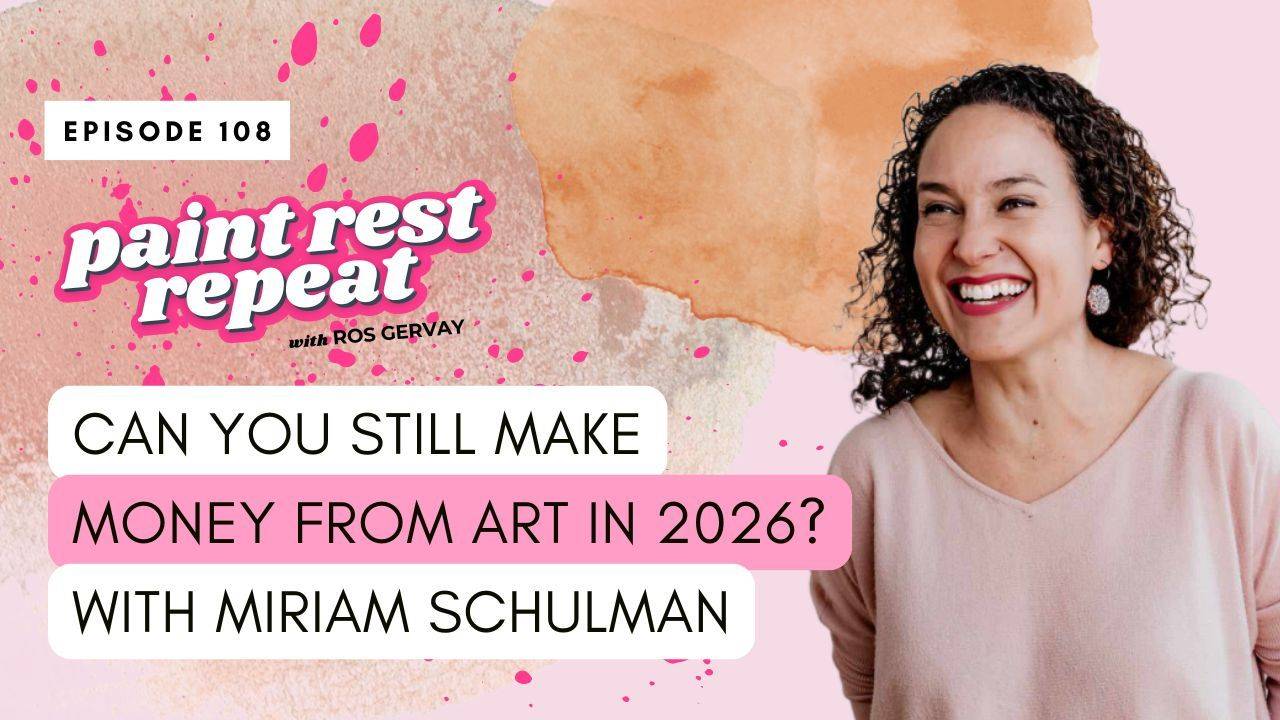
Can You Still Make Money from Art in 2026?
Episode 108 | Paint Rest Repeat Podcast for Artists
In a Nutshell Yes, you absolutely can but it requires pricing your work with confidence, embracing your uniqueness, and resisting the urge to play small. In this blog, artist and coach Miriam Schulman shares how to build a thriving art business without selling out, even in the age of AI.
Here for the links referenced in the episode?
Curious about growing your own art business? Learn more about Ros Gervay’s mastermind program, Thrive, at permissiontopaint.co/thrive
Episode 108: Listen using the player below, or click on your favourite listening platform to subscribe and listen there:


Spoiler: Yes, but not by playing small.
In a time when the creative space is noisier than ever and AI is shifting how we work, many artists are wondering: Is it still possible to make real money from art in 2026? In this open and honest conversation between artist and podcast host Ros Gervay and bestselling author and coach Miriam Schulman, we dig into the truth about what it takes to build a financially sustainable, values-led art business today.
Why the "Starving Artist" Narrative Is Outdated
Miriam Schulman has been a full-time professional artist for over 20 years and now helps artists around the world turn their creativity into income. Her key message? Making money from your art is absolutely possible but it starts with mindset. Pricing too low, copying scarcity-based models, and shrinking to "fit in" are all traps that keep artists stuck.
As she puts it: "You’re never going to grow bigger than your dream - so dream bigger."
What It Actually Takes to Make a Living from Art
Forget overnight success. Miriam says a thriving art business is often built through consistency and boring, repeatable processes. That’s where the sustainability lies. She also shares that she made more money just selling art than when she added podcasting, YouTube, and coaching - proving that art can still be profitable on its own.
But to grow? You’ve got to price with confidence, get visible, and embrace being culturally relevant without chasing trends.
Influence vs. Originality: Where Do You Draw the Line?
We also explore what it means to be influenced in today’s visual, hyper-connected world. According to Miriam, we're all influenced by the cultural moment we're living in - from the Pantone Colour of the Year to societal values. That doesn't mean your work isn’t original.
True originality comes from filtering influence through your own creative lens not mimicking teachers or trends.
Dealing with Copycats & Creative Integrity
What if someone copies your art? Miriam's take: it’s not the end of the world. Most artists evolve through copying in their early stages and those who copy will either grow into their own voice or fade out. She encourages artists to share their work boldly, without fear of being imitated.
And if you're taking courses and creating work inspired by a teacher? Share it, give credit, and keep moving toward your own vision.
Women, Worth, and the Art of Taking Up Space
Ros and Miriam dive into how gender and social conditioning impact how women price, dream, and show up. Many women are taught not to take up space - physically, emotionally, or financially. That shows up in small paintings, small prices, and small business goals.
But if you want to grow? Think bigger. Sell bigger. Paint bigger.
AI and the Future of Art Careers
With the rise of AI, some artists worry their skills will be replaced. Miriam offers a refreshing take: AI might take over certain graphic or surface pattern roles, but it can't replicate the heart, soul, and handmade quality of fine art, ceramics, textiles, or original creative voices.
In fact, the demand for tactile, human-made art is growing especially as the digital world expands.
Final Thoughts
So, can you still make money from art in 2026? Yes. But you have to:
- Believe in your worth
- Price your art to reflect its value
- Lean into your uniqueness
- Stay culturally aware without chasing trends
- Show up and take up space
Because there is room for you if you're willing to claim it.
If you’re ready for more personalised support in building your art business, there are plenty of ways we can work together — from self-paced courses and practical resources to memberships and masterminds. Reach out here.
Ros x
Ros Gervay is an Australian artist and creative business coach who helps artists build sustainable, income-generating art businesses without burnout or compromise. She is the founder of Art for the Heart (AFH) — an online membership community for artists at all stages — and the creator of the Thrive Mastermind, a professionalisation container for artists ready to grow beyond the learning stage. Ros hosts the Paint Rest Repeat podcast, where she shares honest conversations about the art life, creative business, and what it really takes to get paid to do what you love. Based in Australia and working with artists worldwide. Learn more at permissiontopaint.co
Frequently Asked Questions
Is it still possible to make a living as an artist in 2026? Yes but it requires pricing your work appropriately, finding your unique voice, staying visible, and understanding your market.
Can I make money from art without selling out or chasing trends? Absolutely. Miriam emphasises staying values-led and culturally aware without copying others or chasing fast-moving trends.
What if someone copies my art? Miriam’s advice is not to let it stop you. Most copying is part of a beginner phase, and true success comes from originality and visibility over time.
How does AI affect the future of artists? AI may affect digital and surface pattern roles, but demand for tactile, handmade, soulful art is actually growing especially in fine art, ceramics, and textiles.
I’m just starting out. Should I price low to attract buyers? No. Pricing low often comes from scarcity mindset and undervaluing your work. Start by pricing based on the true value of your time, skills, and impact.